
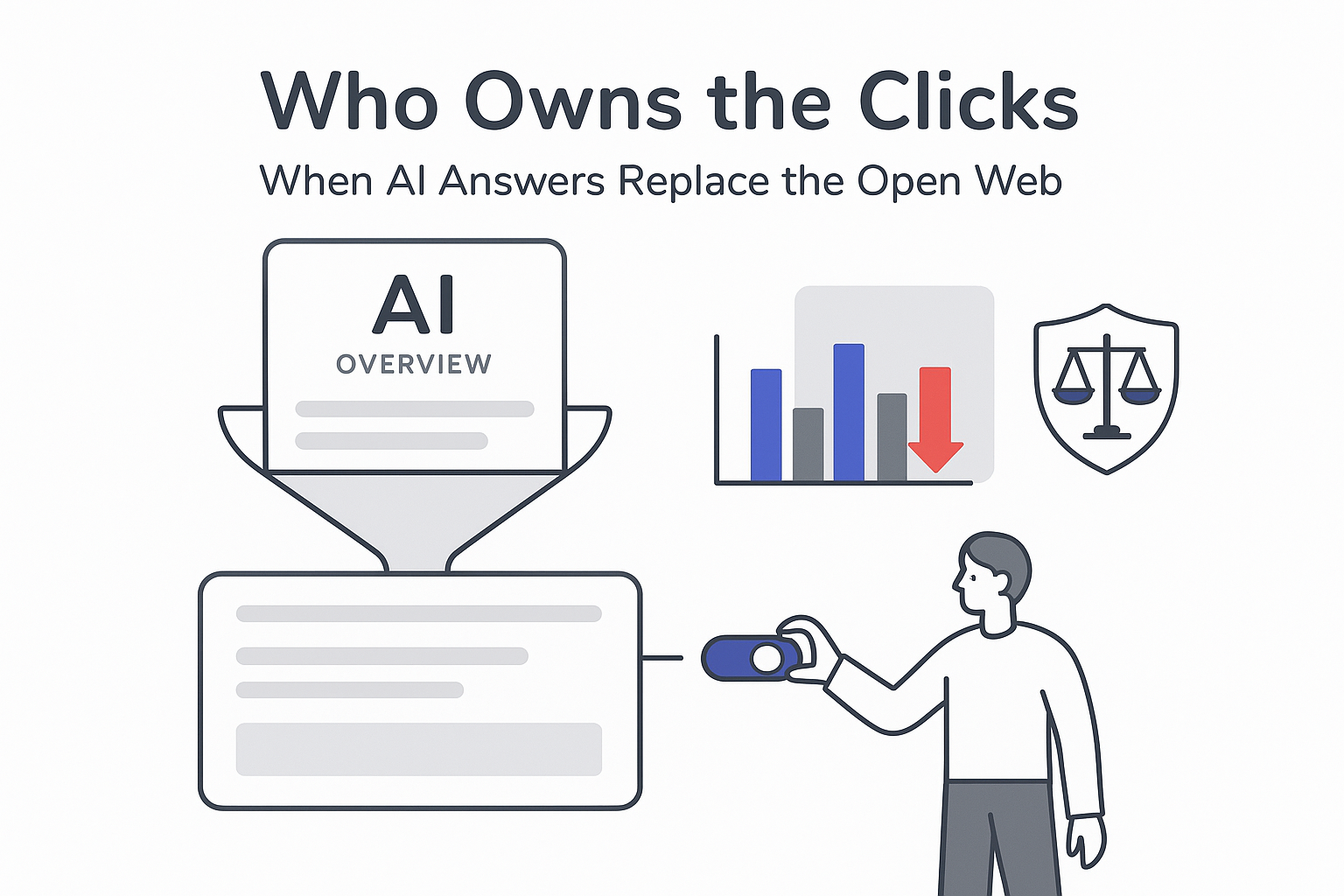
Penske Media Corporation (PMC) has filed a memorandum in U.S. federal court opposing Google's motion to dismiss PMC's antitrust lawsuit. The filing, submitted in February 2026, alleges that Google's AI-driven search results reduce traffic to publisher websites by answering user queries directly on Google's results pages.
The case centers on AI Overviews and related features that appear on search results pages rather than sending users to external sites.
Antitrust filing targets Google's AI search results
PMC, publisher of brands including Deadline, The Hollywood Reporter, and Rolling Stone, accuses Google of using its dominance in search to "coerce" publishers into supplying content for AI training and AI Overviews without compensation. The memorandum argues that these AI features reduce incentives for users to click through to publisher sites.

According to the filing, Google has shifted from operating as a traditional search engine to functioning as an "answer engine." PMC claims that AI-generated summaries on search results pages "cannibalize" publisher traffic and threaten the economic model of ad-supported and subscription-based digital publishing.
Key assertions in the memorandum include:
- Google allegedly uses publisher content for training and "grounding" its AI systems, then repackages that information on search results pages.
- The filing claims publishers cannot block AI use of their content without also harming their visibility in traditional search results.
- PMC describes this as a "coercive reciprocal dealing" arrangement that preserves what it calls Google's monopoly in search and search advertising.
- The memorandum alleges that Google's AI outputs directly compete with publisher content for user attention.
- PMC states that Google's AI Overviews increase zero-click searches, where users do not visit external sites.
The filing quotes publishers' situation as "acquiesce - even as Google cannibalizes the traffic publishers rely on - or perish." It further asserts that through retrieval-augmented generation, or "grounding," Google "repackages, and republishes" publisher content directly on results pages. PMC claims this process diverts traffic that previously supported advertising, affiliate, and subscription revenue.
Background on Google's stated "web ecosystem" approach
PMC's memorandum frames its arguments around what it calls a "fundamental fair exchange" between Google and web publishers: publishers allow Google to crawl and index their content in return for referral traffic from search results. The filing cites public statements by Google over multiple years to support this framing.
The memorandum references an early Google corporate document, presented as Google’s Philosophy, that stated Google's goal was to have users "leave its website as quickly as possible." It also cites a May 2025 post on the Google Developers Search blog, where Google wrote that its "core goal remains the same: to help people find outstanding, original content that adds unique value" in a Search Central blog post. PMC presents these statements as evidence of an established understanding with publishers.
The filing further cites remarks by Google CEO Sundar Pichai from a 2025 podcast interview. According to the memorandum, Pichai said that sending people to the "human created web" in AI modes would be a "core design principle." The document quotes Pichai expressing a commitment to the news and journalism "ecosystem" and to continuing to prioritize approaches that support it.
PMC argues that these public statements define a baseline competitive condition for how publishers participate in search. The memorandum then contrasts this with Google's current legal position. According to PMC, Google's court filings assert that no reciprocity agreement exists because Google has not promised to deliver specific amounts of traffic.
Procedural status and cited sources
The February 2026 memorandum was filed as part of PMC's existing antitrust complaint against Google and specifically responds to Google's motion to dismiss the case. Based on the information in the filing, the court has not yet ruled on that motion.
PMC's complaint focuses on Google's search business and associated advertising products. The filing characterizes Google as holding a search "monopoly," though this is an allegation by PMC, not a judicial finding. The memorandum states that Google's conduct maintains this position while weakening independent publishers.
The legal document repeatedly links observed traffic declines to the rise of AI Overviews and other zero-click search formats. It claims users "are reading the overview and stopping there," based on PMC's internal observations. The memorandum concludes that AI-driven zero-click results, combined with AI training and grounding on publisher content, cause measurable traffic loss for PMC's sites.








.svg)

.svg)
.svg)