
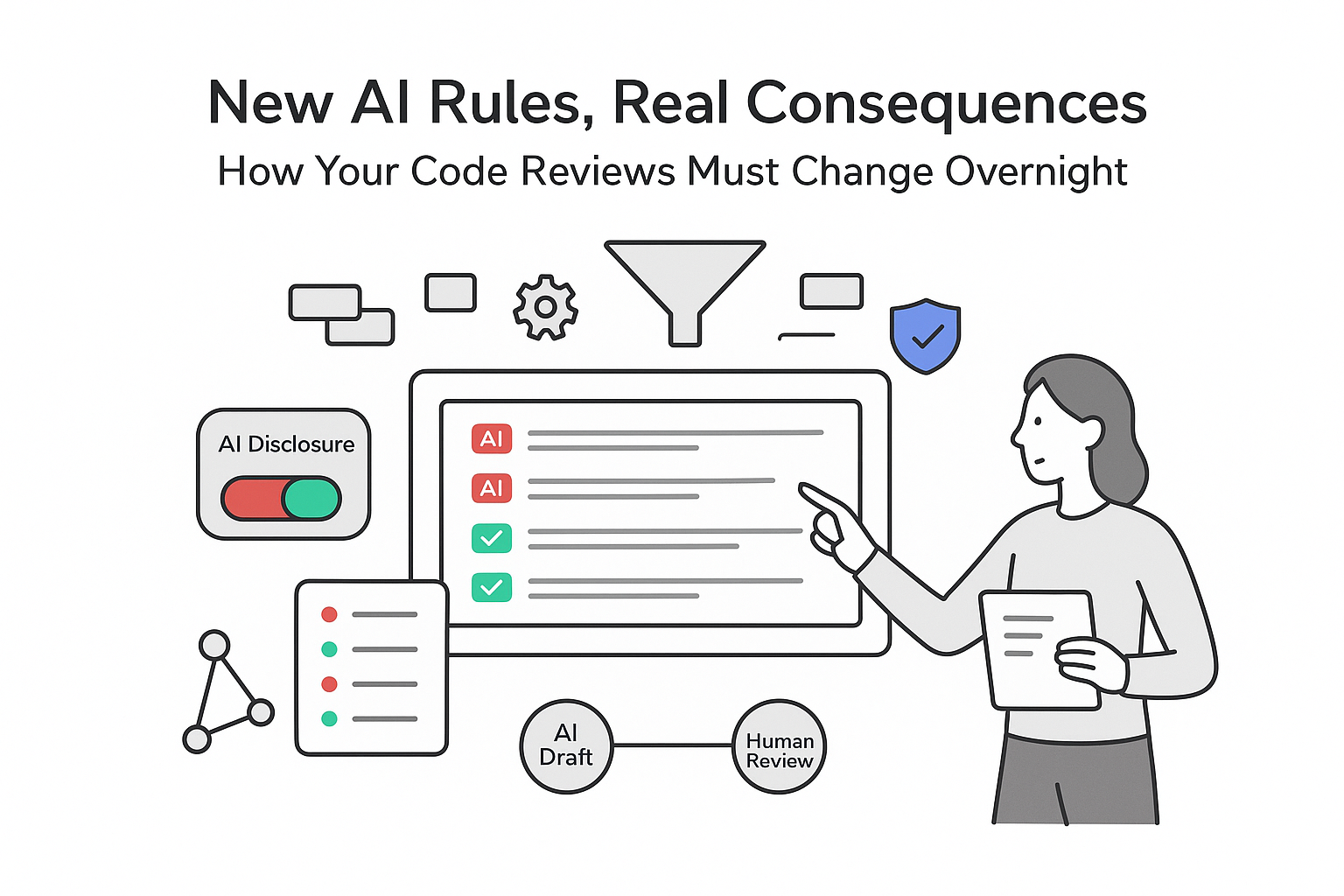
WordPress has published project-wide artificial intelligence contribution guidelines on WordPress.org, setting rules for AI-assisted code and content submissions. The guidelines apply to plugins, themes, documentation, and media created for the open source WordPress project and aim to keep contributions transparent, GPL-compatible, human-accountable, and aligned with existing quality standards.

Key Details
The new guidance makes clear that human contributors remain responsible for everything they submit, even when they use AI tools. It also requires explicit disclosure when AI meaningfully assists with pull requests or Trac tickets.
- Contributors are responsible for their work; AI is not treated as a contributor.
- Contributors must disclose meaningful AI assistance in pull request descriptions or Trac comments.
- All AI-assisted output must be compatible with the GPLv2-or-later license.
- The rules cover non-code assets such as documentation, screenshots, images, and educational materials.
- Reviewers may reject low-quality, unverified AI output, which the guidelines refer to as "AI slop".
WordPress defines "AI slop" as low-signal or unverified output, including hallucinated references and needlessly complex code. Generic or untested pull requests that do not reflect real debugging or usage may also be flagged as AI slop.
- Contributors are encouraged to use AI for drafts, then personally review, test, and edit before submission.
- Submissions should be small, focused, and accompanied by clear, specific commit messages.
- Contributors are expected to run and document real tests.
- References in pull requests should link to verified Trac tickets, GitHub issues, or official documentation.
Background Context
WordPress is licensed under the GNU General Public License version 2 or later. Plugins and themes in the official directories must use GPL-compatible licenses.
The AI guidelines instruct contributors to avoid tools whose terms prevent using generated output in GPL-licensed projects. They also warn against relying on AI tools to "launder" incompatible licenses by rephrasing or reproducing non-free code.
If AI-generated output reproduces non-free or license-incompatible code, it cannot be included in WordPress contributions. These rules apply across plugins, themes, documentation, and media assets produced for the WordPress project.
Source Citations
WordPress documents its GPLv2-or-later licensing requirements on the official project site at wordpress.org/about/license. The AI guidelines reference these requirements when outlining acceptable AI tools and outputs.
Search Engine Journal reported on the publication of the AI guidelines in an article by staff writer Roger Montti, reproducing excerpts from the WordPress guidance, including the core principles and examples of AI slop.





.svg)

.svg)
.svg)