
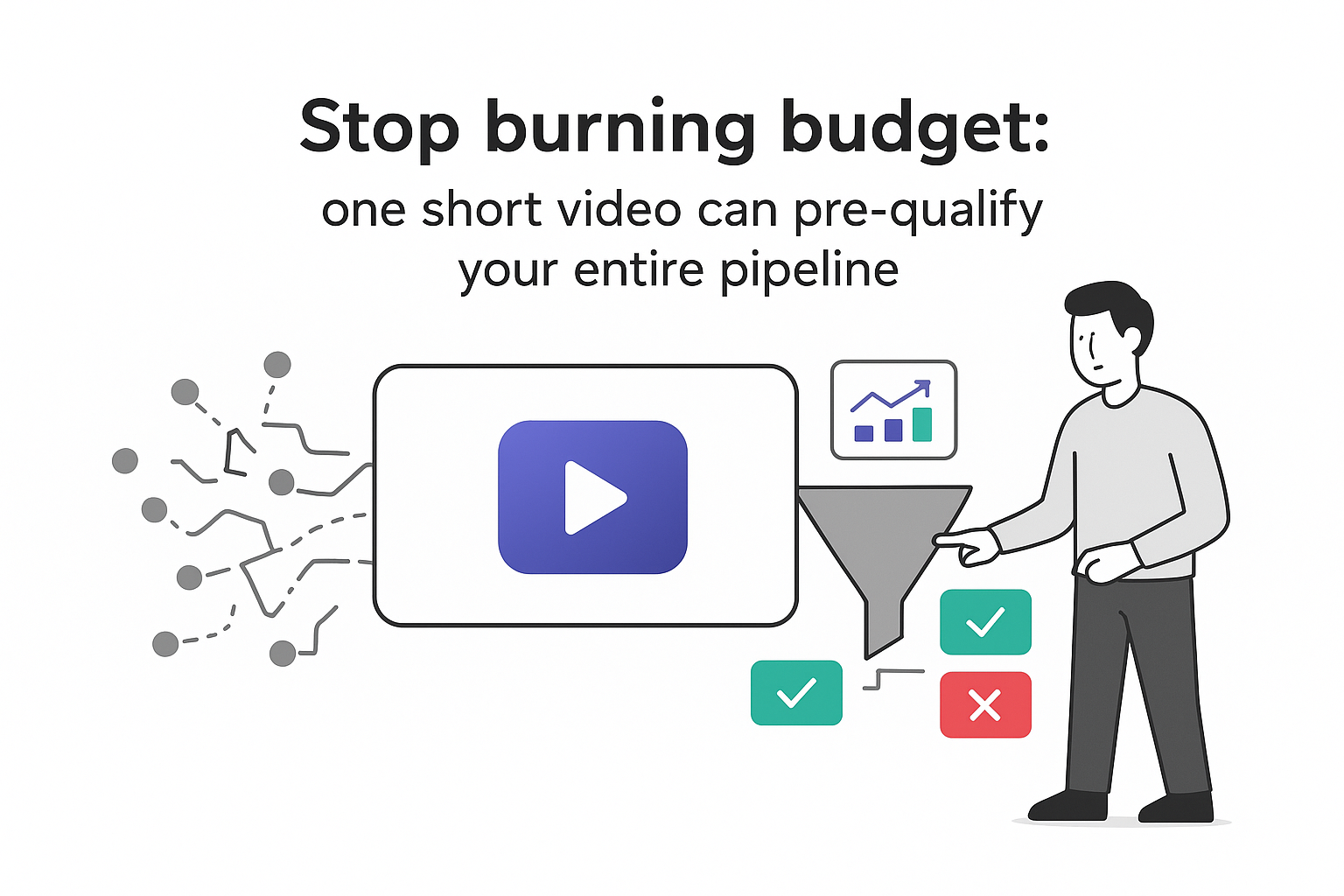
For most B2B service founders, the question is straightforward: how do I get more qualified inbound leads without raising ad spend or adding another outbound sequence that my team barely has time to run?
One underused answer is a clear, focused explainer video. When it’s done well, it carries your positioning, sets expectations, and answers the “what exactly do you do?” question in a way a busy stakeholder can absorb quickly. I think of it as a way to deliver the same tight, consistent story every time - without depending on someone’s availability, mood, or slide-deck skills.
What a B2B explainer video is (and why it works)
An explainer video is a short video that shows what I do, who it’s for, and why it matters - usually in about 60 to 120 seconds. For complex, high-ticket B2B services, that “short and clear” constraint is the point: it forces the message into a format that decision-makers can actually process between calls.
Video can also reduce friction in buying groups. In B2B services, a deal rarely depends on one person. The person you speak with has to relay your value to finance, leadership, procurement, legal, and sometimes an internal delivery team. A concise explainer gives them something easy to forward, replay, and align around.
You’ll sometimes see industry benchmarks suggesting that adding video to key pages can improve conversion rates, and that video in emails can lift engagement. The exact numbers vary widely by audience, traffic quality, and offer clarity, so I treat those benchmarks as directional, not guaranteed (see this general explainer overview as a source). The practical takeaway is simpler: if my offer is even slightly hard to explain in one paragraph, a video often helps prospects self-qualify faster.
Where I’d use one across the B2B journey
A single explainer video can do real work, but the bigger advantage is how it supports multiple steps in the buyer and client lifecycle. I’m not trying to “add more content.” I’m trying to remove repeated explanations that slow revenue down or create misunderstandings.
Here are the placements that tend to matter most for B2B services - especially when you pair the video with strong landing page message match:
- Homepage or service-page hero to clarify the offer fast and reduce bounce from confused visitors.
- Sales follow-ups and proposal support to reinforce the message after a call and help internal champions sell it internally.
- Onboarding and training to standardize how clients engage, reduce avoidable questions, and shorten time-to-value.
- Partner or internal enablement so other people can explain the service consistently without improvising the positioning.
The common thread is leverage: the video should replace or compress explanations that would otherwise happen repeatedly in calls, long emails, or dense decks.
What makes an explainer video convert (especially for services)
Service businesses don’t convert on features. They convert on clarity, credibility, and risk reduction. If the video is entertaining but vague, it won’t move a serious deal forward.
When I review explainers that actually support lead quality and sales velocity, they usually follow a simple arc:
- Hook a real pain or desired outcome (not a generic “we help businesses grow”).
- Name who it’s for and who it’s not for so the right buyers lean in and the wrong ones move on. (This is where clear ICP definition and persona research pay off.)
- Explain the approach in plain language with one idea per beat, not a full methodology dump.
- Add proof that matches the buyer’s risk (a specific result, a mini-case, or a credibility marker they recognize).
- Set a clear next step that fits the stage (learn more, request a demo, share with stakeholders, start an evaluation).
Length matters, too. For a top-of-funnel explainer, I aim for 60-120 seconds because it’s long enough to establish context and proof, but short enough that a buyer will actually finish it. If the goal is outreach or social distribution, I’d rather cut it down to a single idea in 30-60 seconds than squeeze a full narrative into a rushed minute.
For onboarding or training, longer can work, but I prefer splitting topics into short modules. In services, one video per question usually beats one long video that tries to cover everything.
How I’d create one quickly without sacrificing quality
Founders often assume an explainer requires a long production cycle. That can be true for high-end brand films, but most B2B explainers don’t need cinematic polish - they need accuracy, pacing, and a message that sounds like a real operator wrote it.
AI-assisted video creation has reduced the time it takes to get a solid first draft, especially for voiceover, rough visuals, and iteration. The risk is that speed can produce generic output, so I focus on tightening the thinking before I touch visuals. If you want examples of the “fast draft” approach, tools like Powtoon explainer videos and document-driven workflows like Doc to video can be helpful starting points.
My practical workflow is:
- Start with a one-paragraph brief. I define the audience, the problem they care about, the specific outcome, and the next step. If I can’t write this clearly, a video won’t fix it.
- Write a short script (roughly 200-300 words). I keep sentences short, avoid jargon, and read it out loud to catch “marketing-sounding” lines.
- Break it into simple scenes. One scene = one idea. If I’m stacking multiple ideas, I’m usually hiding confusion.
- Choose visuals that clarify, not decorate. Simple diagrams, light product/process visuals, and readable on-screen text beat random stock footage.
- Review with the people who sell and deliver. Sales can tell me what prospects misunderstand; delivery can tell me what expectations I’m accidentally setting.
Speed is real once the message is clear. A basic explainer can be drafted and improved in the same day, and revisions become much easier when the structure is modular. The biggest time sink usually isn’t editing - it’s internal disagreement about what the service actually is and who it’s for.
How I measure impact (and whether it’s worth it)
I don’t judge an explainer by views. I judge it by whether it reduces friction at a specific point in the journey. That means picking metrics that match the placement.
The metrics I look at most often are page conversion rate (demo request, inquiry, evaluation start), completion rate and drop-off points, and sales-cycle signals like fewer “so what do you do?” calls, fewer misaligned proposals, or faster stakeholder alignment. If you’re instrumenting video performance, it’s worth setting up a simple review cadence to check Analytics for engagement and then make one change at a time.
A simple ROI way to think about it is conversion lift on traffic I already have. If a page currently converts 1% of 10,000 monthly visitors into 100 inquiries or demos, moving that to 1.5% creates 50 additional opportunities without changing spend. Whether that’s valuable depends on lead quality, close rate, and deal size - but the math is usually easier to justify than “let’s double the ad budget.” If you want to validate lift quickly, keep the scope small and follow a lightweight testing plan like simple A/B testing for busy teams.
Finally, I like tying the video to operational outcomes. If the explainer is meant to reduce sales friction, align it with your follow-up process and definitions of a qualified lead - otherwise you risk creating engagement without throughput (see: sales and marketing SLA that makes follow-up happen).
Common mistakes I avoid (and what to do instead)
The most common explainer-video failure in B2B services is trying to compress an entire company narrative into a minute. That usually produces a fast-paced list of claims that feels like a pitch, not an explanation.
Here are the mistakes I watch for most:
- Overclaiming outcomes without context. If I mention results, I anchor them to conditions (“in X context” or “for Y type of client”) so it doesn’t sound like a blanket promise.
- Hiding the “for who” to sound bigger. Being specific about the ideal client often increases trust, even if it narrows the audience.
- Turning the middle into a feature list. Services are bought on approach, competence, and risk management - so I keep the middle focused on how the work runs and what changes for the client.
- Ending with no direction. If I don’t tell the viewer what to do next, the video becomes informational but not useful.
Finally, I sanity-check assumptions and bias. Many service explainers quietly assume the viewer already agrees the problem matters, already trusts outside help, and already has budget. If that’s not true, I have to earn those points in the story (or at least acknowledge them) instead of skipping ahead to the solution. This is also where visible credibility signals on your site can do a lot of heavy lifting alongside the video (see: security and trust signals that increase checkout confidence).
Used this way, an explainer video stops being a “nice-to-have asset” and becomes part of how I clarify the offer, qualify inbound demand, and reduce avoidable friction in a B2B buying process that’s already complicated enough.



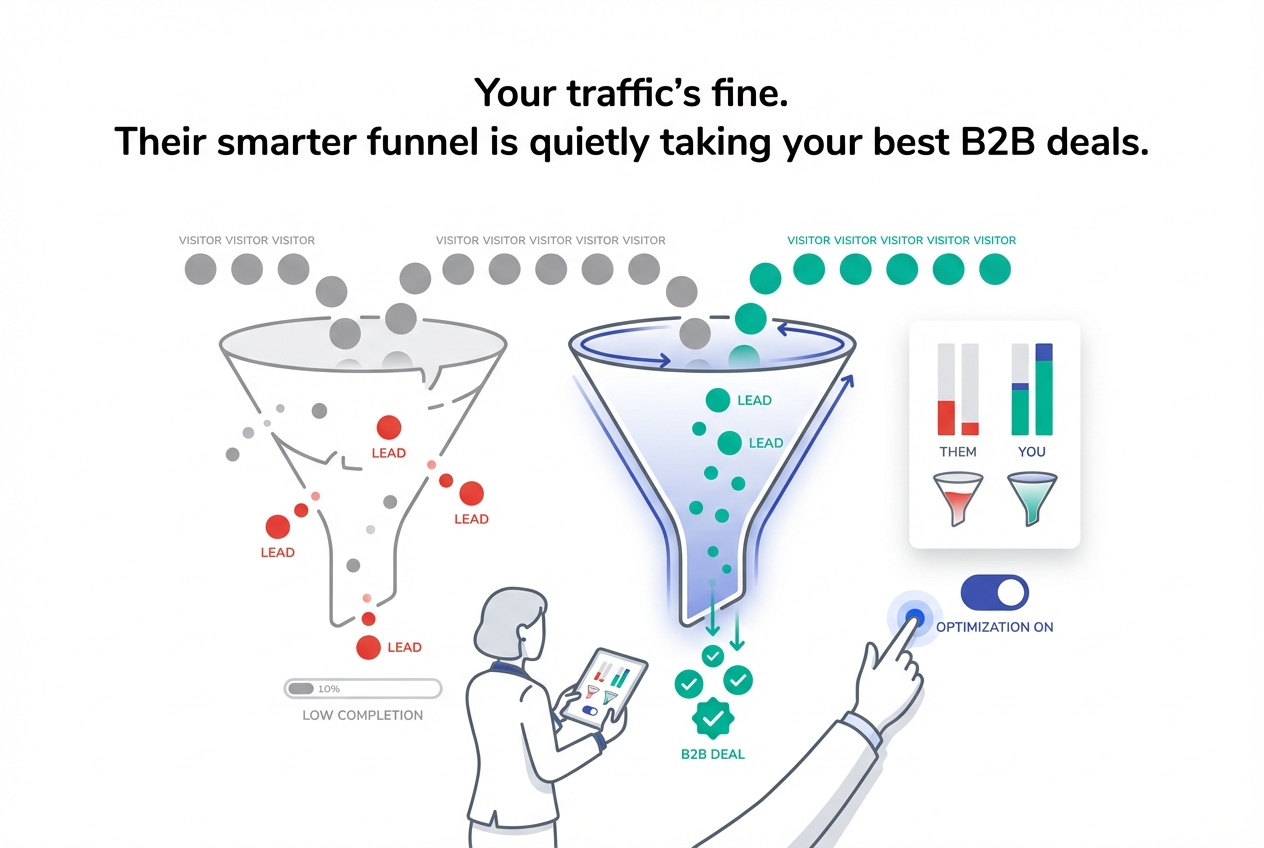
.svg)

.svg)
.svg)