
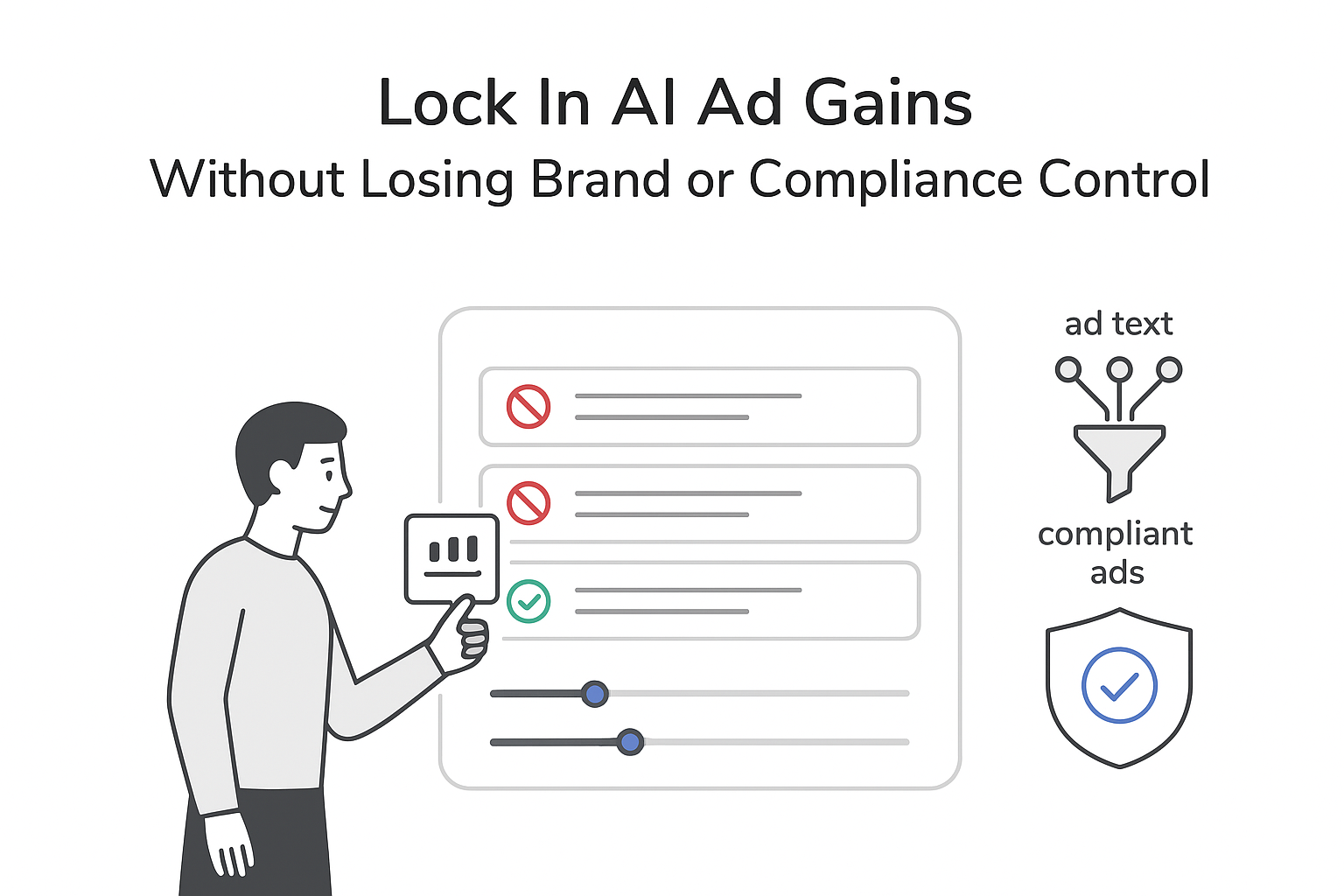
Google has expanded beta access to its text guidelines feature in AI Max to advertisers worldwide. The update applies to Search and Performance Max campaigns and includes full language and industry support, according to Google's latest marketing materials and support documentation.
Google Ads text guidelines beta in AI Max
Text guidelines let advertisers specify which phrases and concepts Google AI should avoid in generated ad copy. Google states that the feature now supports all languages and industries in AI Max for Search and is also available for Performance Max campaigns that use AI Max powered creatives.
Advertisers can define negative phrases using plain language instructions, such as asking the system not to imply that products are cheap. They can also restrict expressions like "only for" if that framing conflicts with internal brand rules. These settings apply when Google AI assembles text assets for responsive search ads and Performance Max creatives.
Key details for advertisers
- Beta access to text guidelines is expanding to all Google Ads accounts using AI Max globally, according to Google.
- The feature focuses on exclusions, allowing advertisers to specify terms and themes that should not appear in AI generated text.
- Guidelines operate alongside existing text customization, which matches ad assets to user intent and query context.
- Advertisers can write rules in their own words, without special syntax or technical configuration.
- Google indicates it is working on additional language based controls to further refine how AI generates ad copy.
- Text guidelines currently apply to text assets and do not replace Google's existing ad policies or enforcement systems.
- Google notes that the global beta rollout for AI Max text guidelines begins today across Search and Performance Max.
Background on Google AI powered creatives
In AI Max, Google AI generates and assembles ad creatives based on advertiser inputs and predicted user intent. Text customization uses signals from queries, audiences, and context to select the most relevant text assets for each impression. Advertisers can then review and edit suggested assets inside their Google Ads accounts or Get started using Google's setup guidance.
Google positions text guidelines as an extension of this system, giving advertisers more granular control over brand tone and compliance boundaries. The approach centers on what should not appear in messaging rather than prescribing preferred styles. These controls operate alongside Google Ads policies, which continue to govern what content may run across Google surfaces.
Automaker BYD is highlighted by Google as an early adopter of these controls within AI Max campaigns. According to Google's case study, BYD increased leads by 24 percent while reducing cost per lead by 26 percent, with text guidelines helping keep generated messaging within its internal brand parameters.







.svg)

.svg)
.svg)