
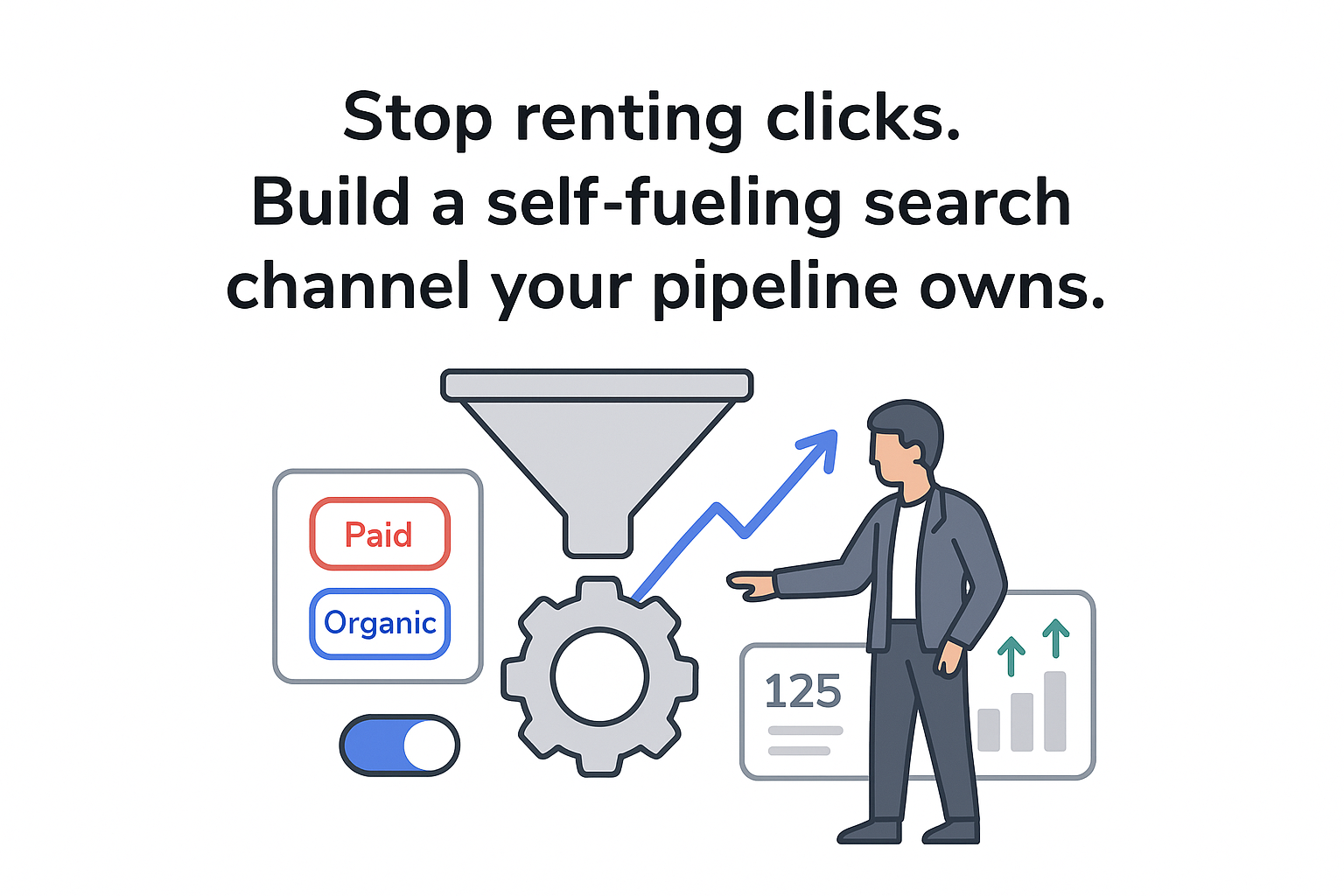
Growth stalls feel personal when I run a B2B service company. I can keep funding paid campaigns, ask sales to send more outbound, and still watch pipeline swing from feast to famine. At some point I have to ask myself: am I building an engine I own, or am I renting attention month by month? That’s where B2B SEO for service-based companies changes the math.
B2B SEO for service-based companies: why it matters to my revenue
For a B2B service firm, SEO isn’t about vanity rankings or traffic charts that look good in a deck. It’s about turning search demand from my ideal buyers into a steadier flow of discovery calls, proposals, and closed revenue.
When it’s done well - and tied to the same commercial outcomes I expect from any growth channel - B2B SEO can:
- Increase qualified visibility for service and proof pages over time (especially for high-intent searches).
- Grow sales-qualified conversations sourced or influenced by organic search.
- Lower blended acquisition cost in the long run, because I’m not paying per click for every visit.
The funnel is straightforward for a consulting, IT services, or agency model: organic search brings qualified visitors to service, vertical, and case study pages; some of those visitors raise their hand; the best-fit leads turn into opportunities and closed-won deals.
The experience is also fundamentally different from paid. Paid can move fast, but the moment I pause spend, demand drops. SEO typically starts slower, then compounds: the pages I publish and improve this quarter can keep attracting buyers next year, without incremental media cost. If you want a tighter way to connect “compound” to commercial outcomes, I use a compounding pipeline framework to keep the work grounded in revenue.
The healthy skepticism many CEOs have about SEO is earned. If SEO is treated as “blogging” that never connects to pipeline, it becomes a cost center. Modern B2B SEO has to be managed to a pipeline standard, not a traffic standard.
What B2B SEO is (and isn’t) for service companies
I think of SEO for my service firm as matching what my ideal clients search for with the services I actually want to sell - across the full sales cycle. It connects search demand with my ICP, my positioning, and how my sales process closes deals.
In practice, that means SEO is a way to show up when decision makers are researching a problem I solve, and to support sales conversations with credible proof (case studies, outcomes, risk reduction, and a clear process). When I need a reminder of how to turn organic traffic into commercial conversations, I reference this pipeline-focused approach.
It’s also worth being explicit about what it isn’t. SEO is not “random blog posts,” not chasing broad terms just to say I rank, and not a one-time sweep of title tags that someone does and disappears. Done properly, it touches positioning, sales enablement content, and the way my offers are packaged on-site.
If an SEO tactic doesn’t move me closer to qualified calls and signed contracts, it may help a report - but it doesn’t help my business.
Why B2B service SEO plays by different rules
Most generic SEO advice comes from ecommerce and local “near me” businesses. Some concepts transfer, but B2B services follow different rules because my deals are high value, cycles are long, and multiple people influence decisions.
Low search volume, high deal value. A keyword with modest volume can still be commercially huge if the searchers are senior buyers.
Multiple stakeholders. A CFO, COO, and functional leader may all research the same initiative using different language and evaluating different risk.
Conversions aren’t purely online. Many “conversions” are booked meetings, calls, and multi-touch follow-ups, so measurement has to reflect that reality.
Reputation amplifies search. Even if someone hears about me on LinkedIn, from a partner, or at an event, they still Google my brand, read proof, and compare options before they talk to sales.
Here’s the simplest way I compare models:
| Aspect | B2B service SEO | B2C / online retail SEO |
|---|---|---|
| Main goal | Qualified calls, proposals, pipeline | Direct online purchases |
| Keyword profile | Lower volume, higher intent, niche terms | Higher volume, broader consumer terms |
| Sales cycle | Weeks to months | Minutes to days |
| Decision makers | Committees and buying groups | Individual consumers |
| Proof needed | Case studies, ROI, risk reduction | Reviews, price, features |
| Success measure | Pipeline and revenue from organic | Revenue per visit and order volume |
Because of this, my keyword strategy, content plan, and measurement model need to reflect B2B reality - not consumer playbooks.
The three pillars that make B2B SEO compound
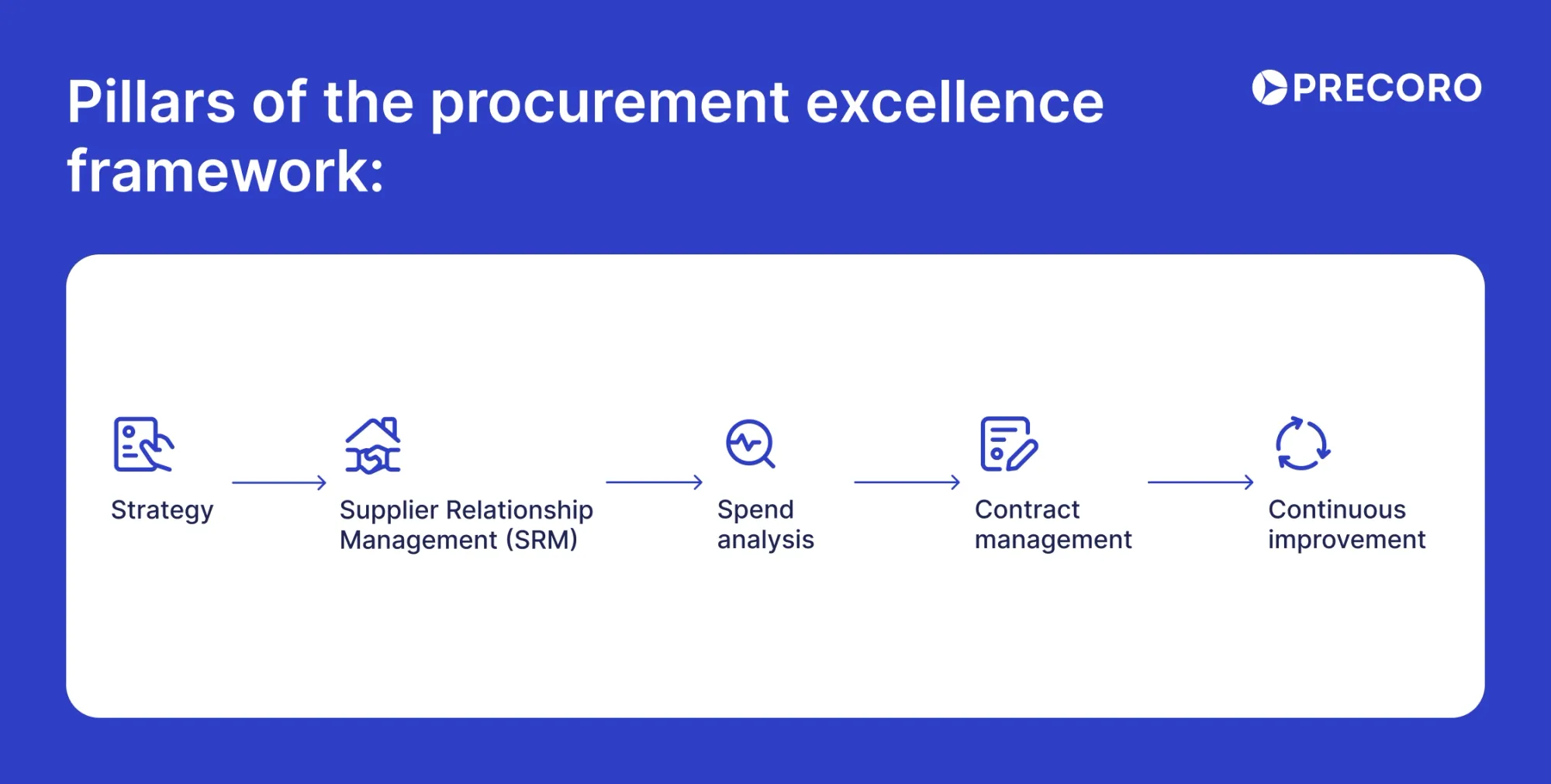
To keep SEO from turning into random acts of content, I work from three pillars: strategy and ideal client targeting, conversion-focused content, and authority/trust/technical health. Each pillar supports the others. I can publish excellent content, but if it targets the wrong buyers, results stall. I can rank well, but if the site feels untrustworthy or performs poorly, high-intent visitors bounce and never become leads.
Pillar 1: Strategy and ideal client targeting
Everything starts with the clients I actually want more of: industry, company size, region, deal size, and the decision makers involved. From there, I reverse-engineer search demand by mapping service lines to specific buyer problems, grouping queries by intent (problem-aware, solution-aware, vendor-aware), and prioritizing clusters by revenue potential - not just keyword volume.
A practical way I pressure-test this is by looking at the last 12 months of closed-won deals and identifying a handful of “hero” combinations (service line + vertical + deal size). Those become my first SEO focus areas, because they’re already proven to close.
Pillar 2: Conversion-focused content
B2B SEO often fails not because rankings don’t move, but because landing pages are vague. A buyer clicks through on a high-intent term and lands on a page that could belong to any firm.
Instead, I want pages that make it obvious who the service is for, what outcomes it drives, and why I’m a credible choice. In most B2B service companies, a lean set of high-performing assets beats a massive blog archive. I’d rather have a tight footprint of strong service pages, a few vertical/use-case pages, and genuinely specific case studies than publish hundreds of generic articles that never show up in late-stage deals.
Pillar 3: Authority, trust, and technical health
Even with sharp targeting, SEO stalls when trust is missing. I think about trust in three layers: authority signals (reputable mentions and links), on-site credibility (specific proof, clear team expertise, real outcomes), and technical foundations (speed, crawlability, clean structure, and accurate tracking). Technical debt is especially sneaky - redesigns, migrations, and messy legacy pages can quietly erode visibility.
If you’re diagnosing plateaus, it helps to separate “strategy is wrong” from “execution is blocked.” I keep a running list of common stall patterns in why B2B SEO stalls pipeline.
A simple B2B SEO maturity model (so I set the right expectations)
Not every service company needs a big SEO team, but I do need to know where I stand so goals match reality.
Stage 1: Ad-hoc experiments
SEO happens when someone has time. Results are inconsistent, reporting (if it exists) is traffic-heavy, and no one can clearly explain which pages create revenue. This is where I feel over-dependent on paid, outbound, and referrals.
Stage 2: Managed program
I have defined keyword clusters linked to services, a consistent publishing rhythm, and baseline reporting for organic leads. Growth becomes more reliable, but plateaus can appear if SEO remains isolated inside marketing and isn’t connected to sales feedback, proof creation, and technical maintenance.
Stage 3: SEO-driven growth engine
SEO is treated like an owned acquisition channel. Goals roll up to pipeline and revenue, not just sessions. Content is built to help win deals, not to fill a calendar. Measurement connects organic activity to opportunities and closed-won, and the roadmap is planned with sales and operations in mind.
Building my B2B SEO playbook without breaking what already works
A “playbook” is just a repeatable way I plan, create, and improve SEO assets. The key is I don’t have to rip out channels that already work. SEO layers on top of paid, outbound, partnerships, and referrals - then reinforces them by improving how buyers validate me when they search.
I start with a frank performance assessment: which pages already bring organic leads, which high-intent queries I’m close to winning (page 2-3 visibility), where the site is slow or messy, and how organic visitors actually behave on conversion paths.
On resourcing and budget, I avoid picking a number out of thin air. What matters is whether the investment matches the commercial goal and the speed I need. Early on, SEO can be a focused program with clear priorities and consistent implementation capacity. As organic begins to produce measurable pipeline, it becomes easier to justify expanding content production, technical work, and proof-building because I can compare it directly to other channels on cost per opportunity and cost per win.
Where I look for early wins (without confusing them for the strategy)
To build internal confidence, I like to prioritize improvements that connect fastest to pipeline. That usually means tightening the highest-intent service and vertical pages, strengthening internal linking so those pages are easy to find (for humans and crawlers), and making sure proof is visible where buyers make decisions.
Quick wins tend to come from pages that already have some traction but don’t convert well: unclear positioning above the fold, weak differentiation, generic copy, or missing credibility. When those are fixed, the same traffic often produces more qualified inquiries - before rankings even meaningfully change.
I also phase work around the sales cycle: bottom-of-funnel pages first (services, comparisons, vendor-aware searches), then vertical pages and case studies, then broader thought leadership once conversion assets are strong. That sequencing keeps SEO tied to revenue while I build a longer-term compounding base.
Measurement: KPIs, ROI, and realistic timelines
SEO produces plenty of metrics; I only trust the ones that help me make decisions and explain ROI in business language. I split measurement into leading indicators (to confirm momentum) and revenue metrics (to prove impact).
These are the core KPIs I track:
- Qualified organic sessions to priority service/vertical/case-study pages.
- Organic-sourced consultation or meeting requests (and their qualification rate).
- SQLs sourced or influenced by organic search.
- Opportunities and pipeline value sourced or influenced by organic.
- Closed-won revenue from organic-origin or organic-influenced deals.
- CAC and LTV:CAC by channel (organic vs paid vs outbound), using the same definitions.
When I need to standardize definitions across marketing and sales, I’ll often reference third-party metric breakdowns (for example, Zendesk has a solid overview) and then translate those into our CRM and reporting rules. If AI is part of how we’re improving sales operations and data hygiene, I’ll also keep an eye on broader adoption patterns from sources like Salesforce.
For ROI, I keep the logic simple: I total the revenue (or pipeline, with a consistent conversion assumption) from deals where organic was a first touch or meaningful touch, then compare it to the fully loaded SEO investment over the same period. For example, if organic-influenced deals produce $200K in closed revenue over 12 months and the SEO investment was $80K, that’s a 2.5x revenue-to-spend ratio - before even factoring retention or expansion.
On timelines, I plan for SEO to behave like an asset, not a switch I flip. In many B2B service markets, I expect leading indicators (better rankings for target terms, improved engagement, more qualified visits to key pages) within roughly 3-6 months once changes ship consistently. More dependable growth in SQLs and pipeline often shows up over 6-12 months, and compounding impact is usually most obvious in the 12-24 month window. The biggest delays are often operational - slow implementation - rather than search engines being “mysterious.”
If you want a practical checklist for aligning SEO reporting to revenue (instead of drowning in dashboards), see Vendor LLM security disclosure checklists for marketers for the same “standards-first” mindset applied to measurable outcomes.
Common challenges that quietly limit results
B2B service SEO doesn’t fail for exotic reasons. It usually fails because execution collides with how service companies run.
Limited subject-matter input
My most knowledgeable people are also my most billable. If expertise doesn’t make it into the content, pages become generic and don’t convert. The fix is less about “writing more” and more about capturing real insight efficiently - so content reflects how my team actually diagnoses problems, de-risks delivery, and measures outcomes.
Attribution in complex deals
Journeys are messy: someone might hear about me elsewhere, then search my brand, read two case studies, and convert later. Last-click reporting will under-credit organic. I don’t chase perfect attribution; I aim for consistent attribution that’s good enough to compare channels, understand influence, and spot which pages show up in won deals.
Misaligned expectations
SEO is slow at the start. Without clear milestones and a phased plan, it’s easy to judge SEO on a 30-day cycle it was never designed for. I set quarterly targets tied to implementation, visibility on priority terms, and movement toward qualified inquiries - not just raw traffic. In many B2B motions, buying cycles can stretch over 6-18+ months, so it’s even more important to measure influence, not just instant conversions.
Evaluating an outside SEO partner (without getting trapped in vanity metrics)
If I decide to involve an outside partner, I treat it as a risk-management decision as much as a growth decision. The biggest failure mode is hiring someone who reports on activity and rankings while avoiding accountability for business outcomes.
I look for signs the partner understands B2B services: they can discuss sales cycles, qualification, and what proof is needed to win; they’re comfortable connecting SEO work to CRM-based reporting; and they can explain trade-offs in plain language. I also watch for red flags like guaranteed ranking promises on fixed timelines, heavy emphasis on impressions and generic keyword counts, and a plan that ignores sales feedback and technical realities.
If you’re making this decision now, I’d use a structured evaluation lens like Translating technical SLAs and policies into buyer-friendly language with AI to sanity-check process, accountability, and fit.
The standard I use is simple: if the plan can’t clearly explain how it helps me sign more of the right clients, it’s not a growth plan - it’s just content production.
Conclusion: building a future-proof B2B SEO engine
B2B SEO for service-based companies isn’t magic, but it is one of the few channels that can get cheaper and more effective over time. When I’m clear about my maturity stage, build around the three pillars, and run a repeatable playbook, SEO stops being a black box and starts behaving like a dependable engine.
The real shift happens when I hold SEO to the same standard as any other channel: pipeline, CAC, and revenue - measured consistently and reviewed regularly. From there, SEO becomes a series of focused improvements instead of a guessing game, and organic search can earn a stable, compounding share of my best-fit clients quarter after quarter. If your pipeline still feels fragile, it’s worth revisiting Multilingual support content parity audits using AI as a reminder that small execution gaps can quietly cap results.



.svg)

.svg)
.svg)