
Growth That Sticks Requires More Than Referrals and Paid
You want growth that sticks - not another "wait three more months" memo. If you run a B2B service company, you probably already win with referrals and paid search. Yet the pipeline gets choppy, CAC creeps up, and sales feels the dip first. That is where a revenue-built B2B SEO program earns its keep. I treat SEO as a channel that must move leading indicators fast, improve sales outcomes, and stand up to attribution scrutiny. No black box. No wishful thinking. Just a plan that aligns what buyers search for with what your team can deliver - and a cadence that proves progress every week.
What Moves First: Highlights From B2B SEO Built for Revenue
These are typical ranges I see in B2B services when technical debt is addressed early, bottom-funnel intent is prioritized, and content velocity stays consistent. They are not promises; they are benchmarks to stress-test your plan.
- 30–45 days: technical fixes lift crawl efficiency and indexation by 15–40 percent; impressions start to rise.
- 45–90 days: comparison and alternatives pages raise qualified demos by 10–25 percent; sales reports show cleaner lead quality.
- 90 days: blended CAC drops 8–15 percent as organic replaces a slice of paid.
- 6 months: pipeline lift of 25–60 percent when domain strength sits around DA 20–40 and content cadence holds.
- 5–10 percent win-rate uplift when sales enablement content mirrors buying-committee objections.
- Cleaner SQL tracking with shared attribution between your analytics platform and CRM; weekly scorecards and quarterly reviews keep owners and dates pinned.
How I Run It: Pair Demand Capture With Creation, Then Compound
Growth slows when paid search gets expensive and referral volume plateaus. I fix the pipeline at its roots by pairing demand capture with demand creation. Capture starts at the bottom of the funnel: comparisons, alternatives, pricing, and use-case pages that match clear intent. Creation compounds that base with topic authority, so you rank across the questions buyers ask while they shape their shortlist.
I build around six pillars. ICP and offer fit clarifies who you sell to and which services carry the highest lifetime value. Technical foundations remove crawl traps, repair site mapping, and stabilize templates so every new page gets full credit. Revenue-focused content prioritizes bottom-funnel pages first, then expands into role-based, industry, and use-case clusters to strengthen topical authority. Link earning closes authority gaps with credible, relevant mentions that deserve to exist. Conversion UX removes friction, adds proof, and makes next steps obvious. Analytics and attribution define MQL/SQL rules, align opportunity stages, and let your team see cost, conversion, and revenue by source without a custom export.
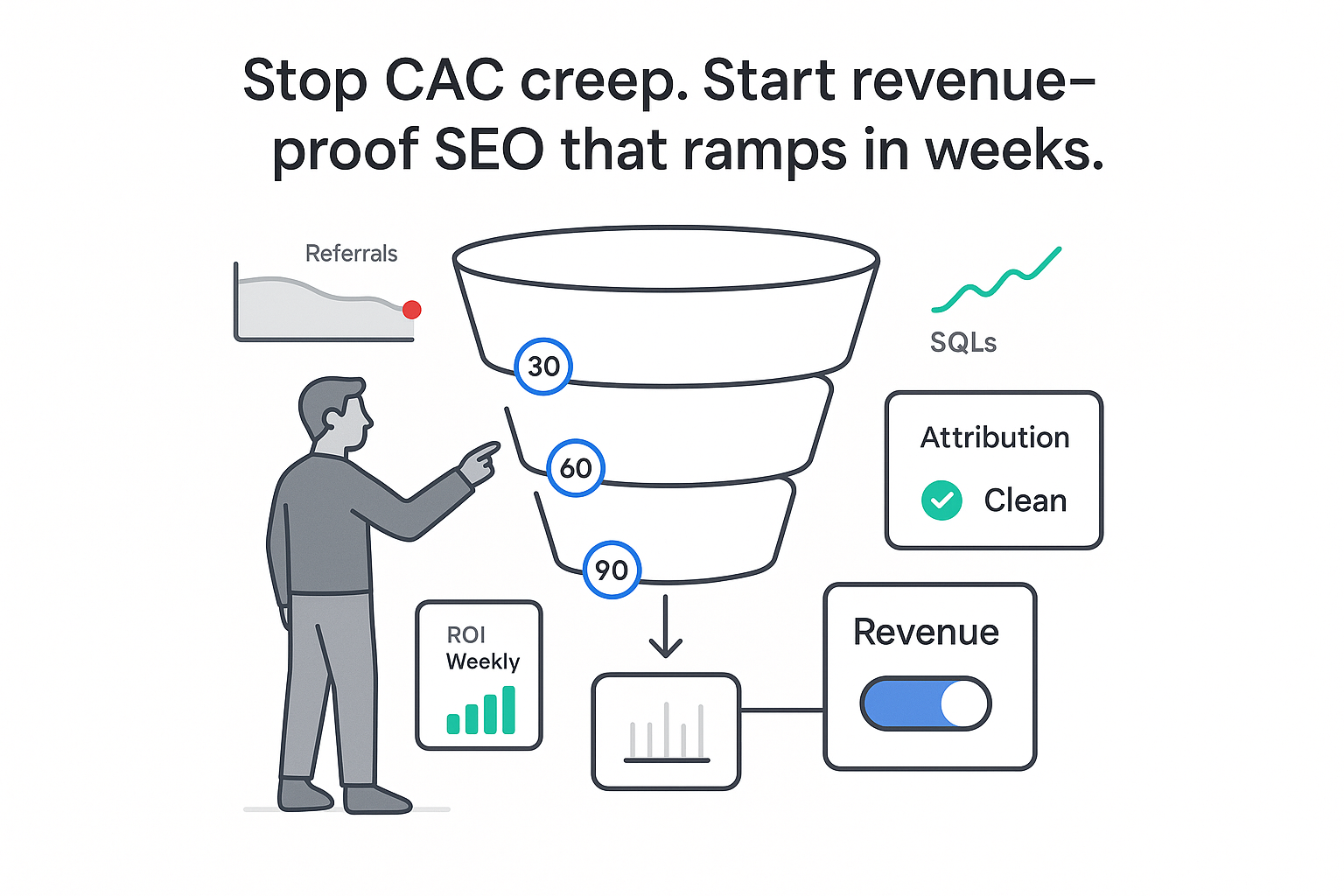
Top-of-funnel content supports awareness and topic authority. Mid-funnel content builds solution understanding and consensus across the buying committee. Bottom-funnel pages capture intent and drive B2B lead generation that sales actually wants. Time to value matters, so I stage the work to show visibility gains in 30–60 days, SQL improvement by 90 days, and compounding revenue impact in 6–12 months. Industry benchmarks commonly cite similar horizons; the spread comes from domain strength, content throughput, and organizational speed.
ROI Without Hand-Waving
Inputs are simple: content velocity and link velocity. In most B2B services, 6–12 high-quality pages or posts per month (anchored to clear intent and coherent clusters) and 4–12 relevant links per month (weighted by topical match and authority) are enough to move markets if execution is sound. Leading indicators include impressions and average position for target clusters, indexation rate and crawl budget usage, and template health and page speed. Lagging indicators are MQLs, SQLs, pipeline value, and revenue closed from organic.
Break-even timelines vary by domain strength. If you sit in DA 51+, bottom-funnel capture often delivers first revenue in 2–4 months. In DA 31–50, think 3–5 months to first revenue and 6–9 to steady ROI. In DA 20–30, expect 4–6 months to first revenue and 8–12 months to predictability. Long sales cycles stretch final attribution, so I use SQLs and pipeline as interim gates while deals mature.
The math stays transparent. SEO ROI equals (organic revenue − cost of SEO) ÷ cost of SEO. Organic revenue equals wins × average deal value; wins equal SQLs × win rate; SQLs equal sessions × visit-to-SQL rate. If the goal is 20 SQLs per month at a 25 percent win rate and a $20,000 average deal value, that is $100,000 in new monthly revenue at goal. With a 1.2 percent visit-to-SQL rate, you would need roughly 1,667 sessions to hit 20 SQLs; at 5,000 sessions, you would expect about 60 SQLs. Each knob - traffic, conversion, win rate - can be tested, logged, and improved. Seasonality can swing impressions by 10–30 percent; trend with moving averages and segment by service line to avoid chasing noise. Multi-touch is real, so I reconcile assisted conversions from analytics with opportunity source in the CRM using a clear precedence rule.
A One-Year Timeline That Decision Makers Can Trust
In the first 30 days, I audit technical health, structure, indexation, and internal links, then fix priority errors that block growth. I map revenue-tied keywords with bottom-funnel first and draft briefs for the initial wave of high-intent pages. Tracking gets set or cleaned up so conversions, SQLs, and pipeline tie back to content.
From 30 to 90 days, I ship bottom-funnel pages and comparison articles, expecting impressions and rankings to move first. I support them with authoritative mentions and tighten conversion across core templates by reducing friction, adding trust elements, and clarifying next steps. A monthly roadmap aligns owners, dates, and the next sprint so work compounds rather than stalls.
From 3 to 6 months, I expand into use-case clusters, partner and industry pages, and role-based content that speaks to the buying committee. Two strong guides supported by sales-enablement assets help win deals and feed remarketing. SQL lift should be visible; I track pipeline from organic by segment and by service line, then reallocate effort toward what moves fastest from second page to first.
From 6 to 12 months, thought leadership begins to earn links on its own - data studies, frameworks, and well-supported opinions. I double down on keywords showing steady upward momentum and refresh pages that slip. Each quarter, the strategy gets a hard review: content vs. links vs. CRO. The budget follows the levers that actually move the needle.
Snapshots and the Mindset That Keeps Results Coming
SaaS implementation partner. Challenge: paid saturated and CAC above $3,000; no rankings for comparison/alternatives. Actions: 14 bottom-funnel pages in 60 days, a technical sprint to strengthen internal links and thin content, and an industry data study that earned relevant mentions. Outcomes: at 90 days, SQLs up 22 percent and win rate up 9 percent; by 180 days, organic pipeline reached roughly $1.2M; by 12 months, organic sourced about 31 percent of new revenue and blended CAC dropped about 17 percent. When bottom-funnel pages lagged at day 45, I refreshed titles and added FAQs pulled from sales calls; rankings jumped the next month.
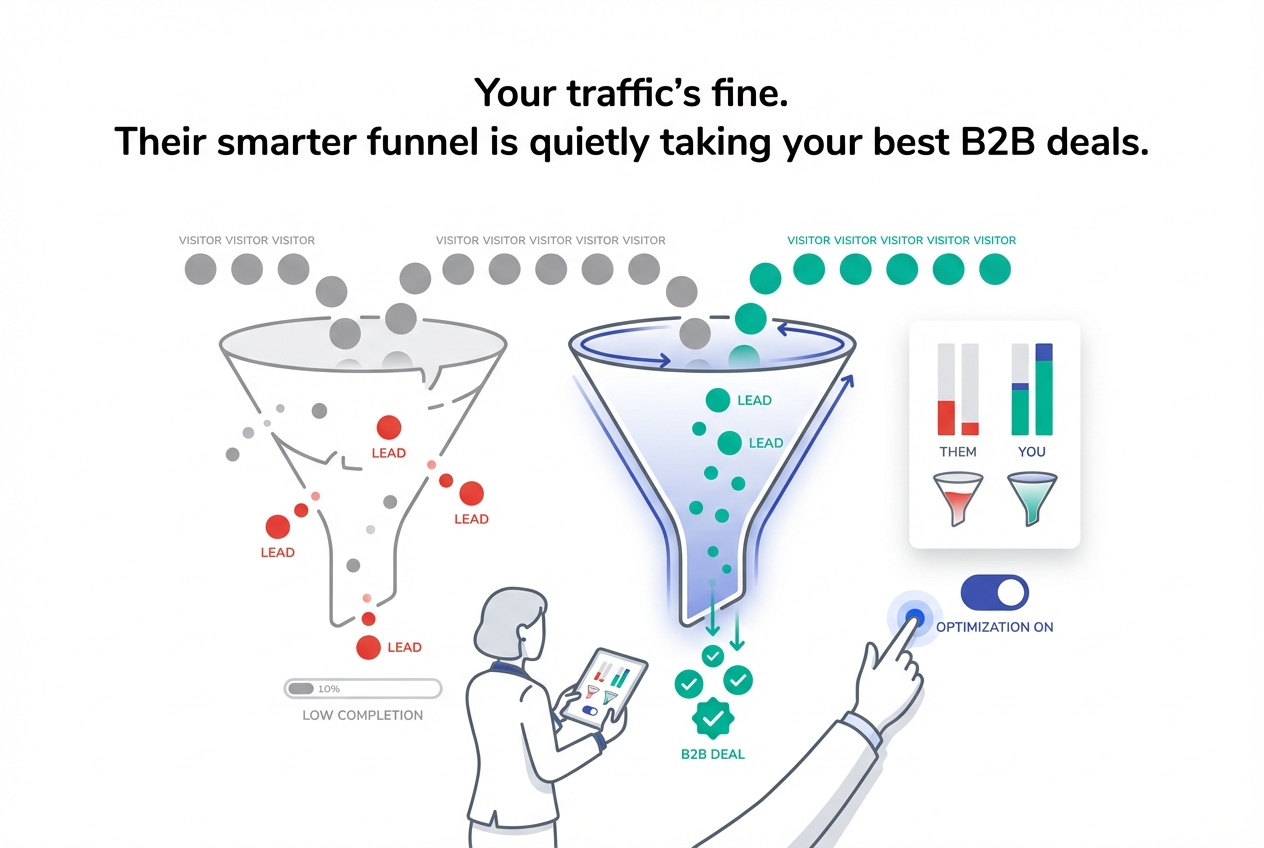
IT services for mid-market. Challenge: long cycle, little content for a buying committee; traffic looked fine but SQLs were soft. Actions: a buying-committee plan with role-specific pages (CIO, CFO, Operations), objection-handling case content, and faster service templates. Outcomes: by 90 days, sales reported cleaner SQL quality; by 180 days, pipeline up 27 percent and time to close down 12 percent; by 12 months, organic contributed about 24 percent of revenue. When two topics underperformed, I pivoted to comparison keywords and spun up partner pages to capture co-branded demand.
Professional services advisory. Challenge: strong brand, weak topical authority in growth advisory terms; few relevant links. Actions: a series of growth frameworks backed by real numbers, expert quotes, and a small quarterly data study. Outcomes: by 90 days, impressions doubled across two core clusters; by 180 days, MQLs up 38 percent and SQLs up 29 percent; by 12 months, three guides held positions 1–3 and organic sourced about 28 percent of new client revenue. When link targets stalled, a timely digital-PR angle earned eight mentions in two weeks.
B2B SEO works when the team owns outcomes. That means clear briefs, subject-matter input, and the willingness to admit when a bet does not land - and change it fast. The market moves. Your buyers change. Rankings ripple. Hold two truths at once: SEO is not instant, yet you can see traction fast. Early wins prove the machine works; the goal is compounding gains that show up in pipeline and CAC. Then build the machine.



.svg)

.svg)
.svg)