
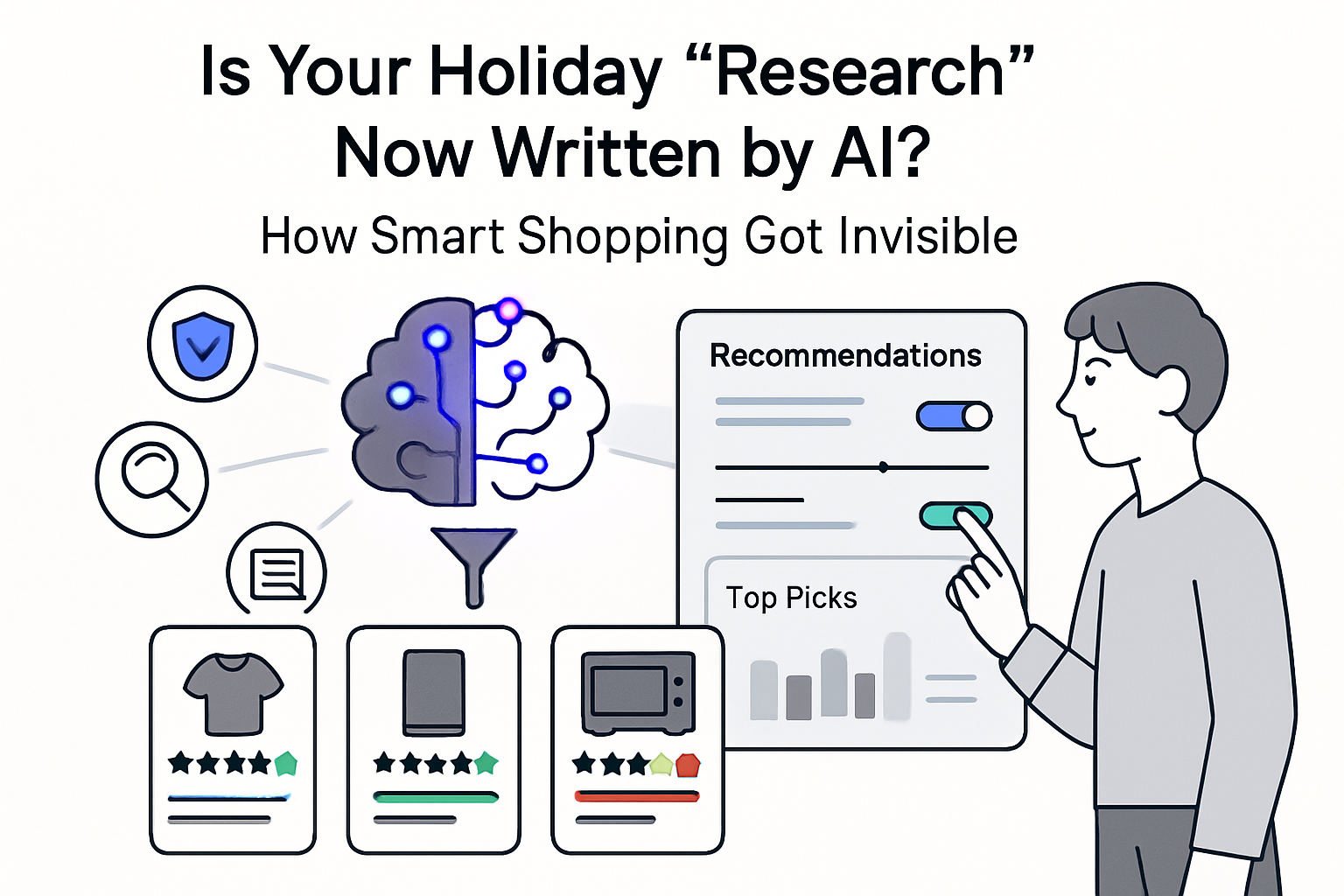
OpenAI has launched a shopping research feature in ChatGPT that builds personalized buyer guides using web data. The feature is rolling out today on ChatGPT mobile apps and the web for logged-in users. OpenAI says usage will be nearly unlimited for these users through the holiday period.
Key details on ChatGPT shopping research
Shopping research in ChatGPT creates interactive buyer guides based on product information from across the web. Users describe what they need, including budget and preferences, then answer clarifying questions from ChatGPT. After several exchanges, ChatGPT returns a structured guide with product suggestions that match the stated requirements.
OpenAI states that the feature pulls details such as price, availability, reviews, specifications, and images from online retailers. People can refine results by marking products as "Not interested" or "More like this" during the conversation. According to OpenAI, the experience currently works best for electronics, beauty, home and garden, kitchen, and sports gear.
OpenAI says shopping research is powered by a shopping-focused GPT-5 mini variant, post trained on GPT-5-Thinking-mini for product decision tasks. In internal evaluations, the system reached 52 percent product accuracy on multi-constraint queries, compared with 37 percent for ChatGPT Search.
- Feature availability: Rolling out now on ChatGPT mobile apps and web for logged-in users.
- Supported plans: Free, Go, Plus, and Pro, according to OpenAI.
- Usage limits: OpenAI says usage will be nearly unlimited through the holiday season.
- Outputs: Structured buyer guides listing recommended products with key attributes and reasoning.
- Interaction controls: "Not interested" and "More like this" buttons help refine product lists.
- Data sources: OpenAI states results come from publicly available retail websites, not from direct retailer submissions.
Background context and privacy information
OpenAI compared shopping research with ChatGPT Search on complex product selection prompts that included multiple constraints. In those tests, shopping research achieved 52 percent accuracy, while ChatGPT Search reached 37 percent. Accuracy here reflects how closely suggested products match requested attributes such as price, color, materials, and specifications.
OpenAI states that user chats within shopping research are not shared with retailers. Results are described as organic, based on public product information gathered from retail websites. OpenAI also notes that users should confirm price and availability directly on merchant sites before purchasing.
Merchants who want their products included can request allowlisting through an OpenAI form for ChatGPT agents. OpenAI documents this allowlisting process in a Help Center article covering ChatGPT agent allowlisting. The company says it plans to add direct purchasing within ChatGPT for merchants using Instant Checkout.
OpenAI acknowledges that shopping research can still include mistakes about details such as pricing or stock status. The announcement advises users to verify any critical product details on retailer pages.
Source citations and official references
Details in this report come from OpenAI's public announcement of ChatGPT shopping research and supporting documentation. These sources describe feature behavior, technical setup, evaluation data, privacy statements, and merchant participation rules.
- OpenAI: "Shopping research in ChatGPT" - feature launch and product description.
- OpenAI Help Center: "ChatGPT agent allowlisting" - merchant participation and allowlisting process.






.svg)

.svg)
.svg)