
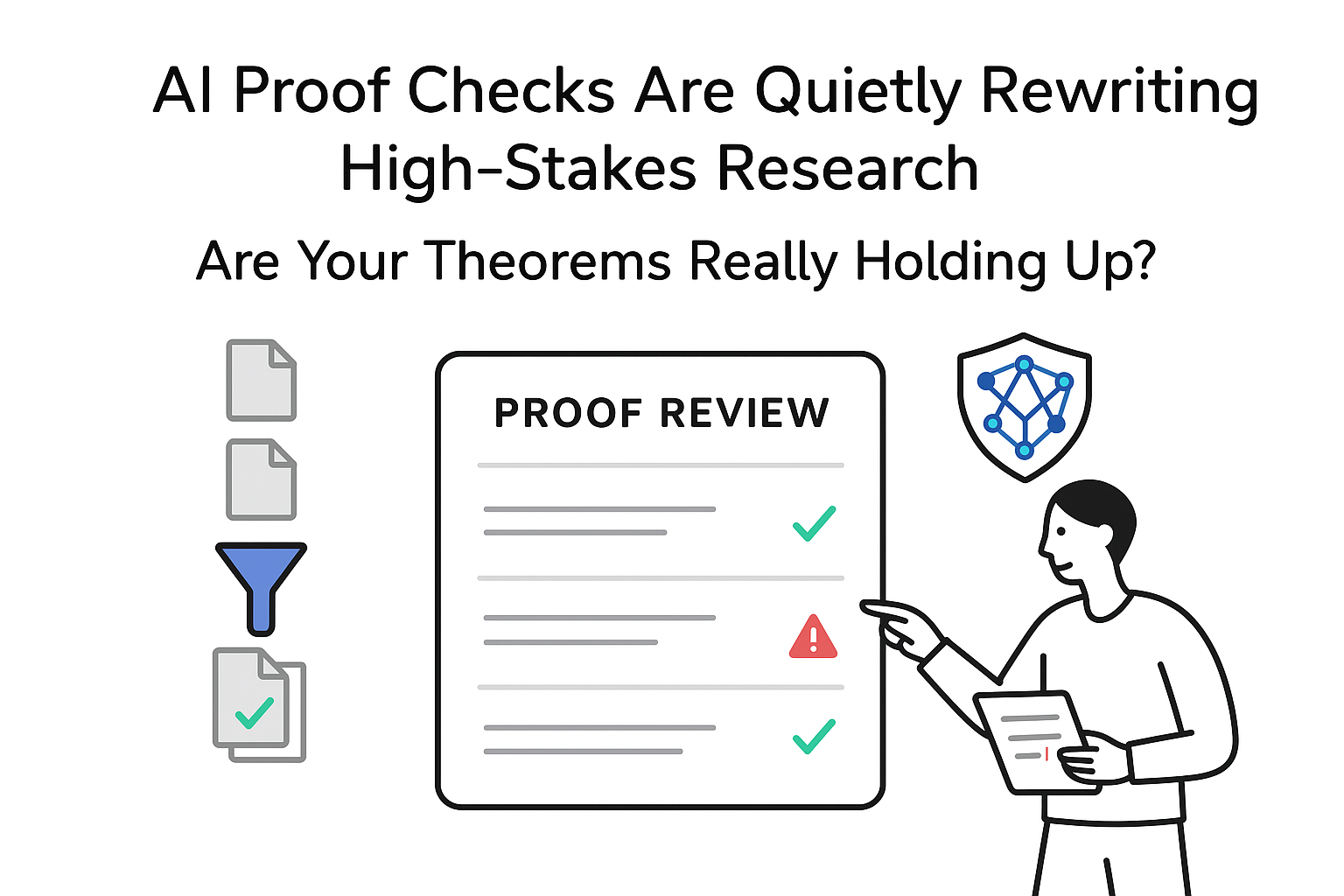
On December 15, 2025, Google Research detailed a Gemini-based feedback tool piloted for STOC 2026 paper submissions. The experimental system supported authors submitting to the Annual ACM Symposium on Theory of Computing as part of an experimental program in the STOC 2026 schedule.
Gemini feedback tool for STOC 2026
The STOC 2026 pilot used a customized version of Gemini 2.5 Deep Think to generate automated manuscript feedback. Google Research scientists Vincent Cohen-Addad and David Woodruff described the project on behalf of the research team.
According to the program description, the tool generated feedback within 24 hours of paper submission. It summarized contributions, flagged potential technical issues, and listed minor corrections and typographical errors.
The system applied the inference scaling methods described in the Gemini 2.5 Deep Think update. It evaluated multiple reasoning paths in parallel, then produced a single consolidated response for each manuscript.
Usage metrics and author feedback
More than 80 percent of papers submitted while the pilot was active opted in to the AI-based review. In a post-experiment survey with over 120 respondents, 97 percent said the feedback was helpful.
The same share reported that they would use the tool again for future submissions. 81 percent said their papers became clearer or more readable after revising based on the Gemini-generated comments.
Respondents highlighted speed, noting that feedback typically arrived within two days. Participants also cited what they described as a neutral tone and consistent reasoning in the system's outputs.
One author reported that Gemini identified "a critical bug... that made our proof entirely incorrect" after months of work. Google shared three testimonials from university professors, including Shuchi Chawla, describing serious errors found through the tool.
Survey responses also pointed to perceived educational uses. 75 percent of surveyed authors believed the system could help students with mathematical rigor and presentation clarity, and 88 percent expressed strong interest in ongoing access during their research process.
Background on STOC, Gemini Deep Think, and project team
The pilot ran alongside the submission process for the Annual ACM Symposium on Theory of Computing, or STOC 2026, which organizers describe as one of the most prestigious venues in theoretical computer science.
According to Google's Gemini 2.5 Deep Think announcement, inference scaling lets the model examine many solution paths before answering. The STOC feedback tool combined multiple reasoning and evaluation traces to help reduce hallucinations and surface relevant proof issues.
Participants remained responsible for verifying any AI-generated suggestions. Researchers reported that, as domain experts, they could filter incorrect model statements and keep accurate insights.
Google credited project leadership to Vincent Cohen-Addad, Rajesh Jayaram, Jon Schneider, and David Woodruff. The blog post also named contributors including Lalit Jain, Jieming Mao, Vahab Mirrokni, and members of the Deep Think team.
The STOC 2026 program committee chair, Artur Czumaj, supported the experiment, alongside many participating authors acknowledged by Google. The publication notes that authors and team members are listed in alphabetical order.
Details in this article come from Google's December 15, 2025 STOC 2026 feedback blog post and related official pages, as well as public documents describing the STOC LLM feedback process and examples of the system's outputs.








.svg)

.svg)
.svg)