
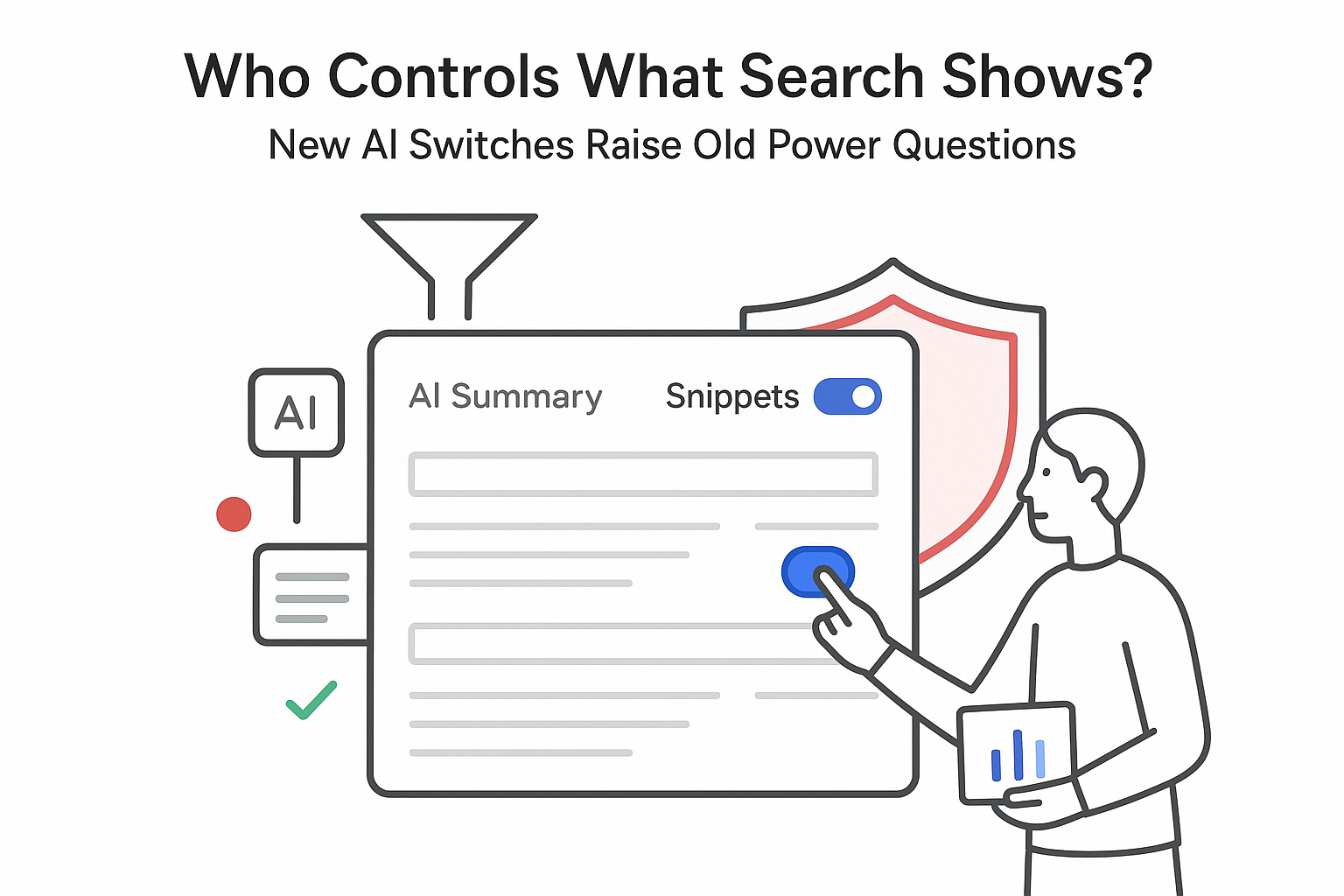
Google is exploring new website controls for its AI-powered Search features, amid close regulatory scrutiny. The company disclosed the effort in a blog post published the same day UK competition authorities opened a consultation.
Google may let sites exclude content from AI Search features
Google says it is "exploring updates" that could let sites "specifically opt out of Search generative AI features." Ron Eden, Principal, Product Management at Google, outlined the proposal in a corporate blog post on Search controls. The post did not include a launch timeline, technical details, or firm product commitments.
Key points from Google's announcement and documentation include:
- Google describes the potential controls as exploratory and under discussion with the "web ecosystem".
- The company says any new mechanisms must avoid creating a "fragmented or confusing experience" for Search users.
- The proposal targets Search generative AI features, such as AI Overviews and AI Mode, rather than traditional blue-link results.
- Google-Extended, a separate control, allows sites to restrict use of their content for training Gemini and Vertex AI models.
- According to Google's documentation, Google-Extended "doesn't impact a site's inclusion or ranking in Google Search".
Google's announcement coincided with the UK's Competition and Markets Authority opening a consultation into Google's general search and search advertising services. The consultation explicitly raises potential requirements for website controls over how their content appears in Search AI features. Both moves keep the focus on publisher control within Google's generative AI search experiences.
Background on existing Search controls and publisher responses
Publishers already have access to some Search-related controls that affect AI Overviews and AI Mode. According to Google's robots meta tag documentation, the nosnippet and max-snippet robots meta directives apply to both generative AI displays and standard search snippets. Sites using these directives reduce or remove snippet content across Search, not only within AI features.
As a result, there is currently no dedicated mechanism to block AI Overviews while maintaining rich snippets in traditional results. Google's post acknowledges this gap but does not announce a specific solution. Eden notes that any new controls must work within the broader Search experience.
Regulators and publishers have raised concerns about AI Overviews over the past year. In July, the UK's Independent Publishers Alliance, Foxglove, and Movement for an Open Web filed a complaint with the CMA seeking the ability to block AI summaries without disappearing from Search. That complaint focused on competition and data usage issues around Google's generative features.
Industry data also shows publishers restricting AI-related access through technical means. A BuzzStream study reported that 79% of major news publishers block at least one AI training crawler. The same study found 71% block retrieval bots that can influence AI citations.
Source citations
- Google blog: "Search, AI features and controls" - official announcement of current and potential Search AI controls.
- UK Competition and Markets Authority - SMS investigation into Google's general search and search advertising services - consultation describing potential requirements for Search AI controls.
- Google crawler documentation - Google-Extended description and scope - explains how sites can control content usage for Gemini and Vertex AI training.
- Google Search Central - robots meta tag documentation - reference for
nosnippet,max-snippet, and related directives.








.svg)

.svg)
.svg)