
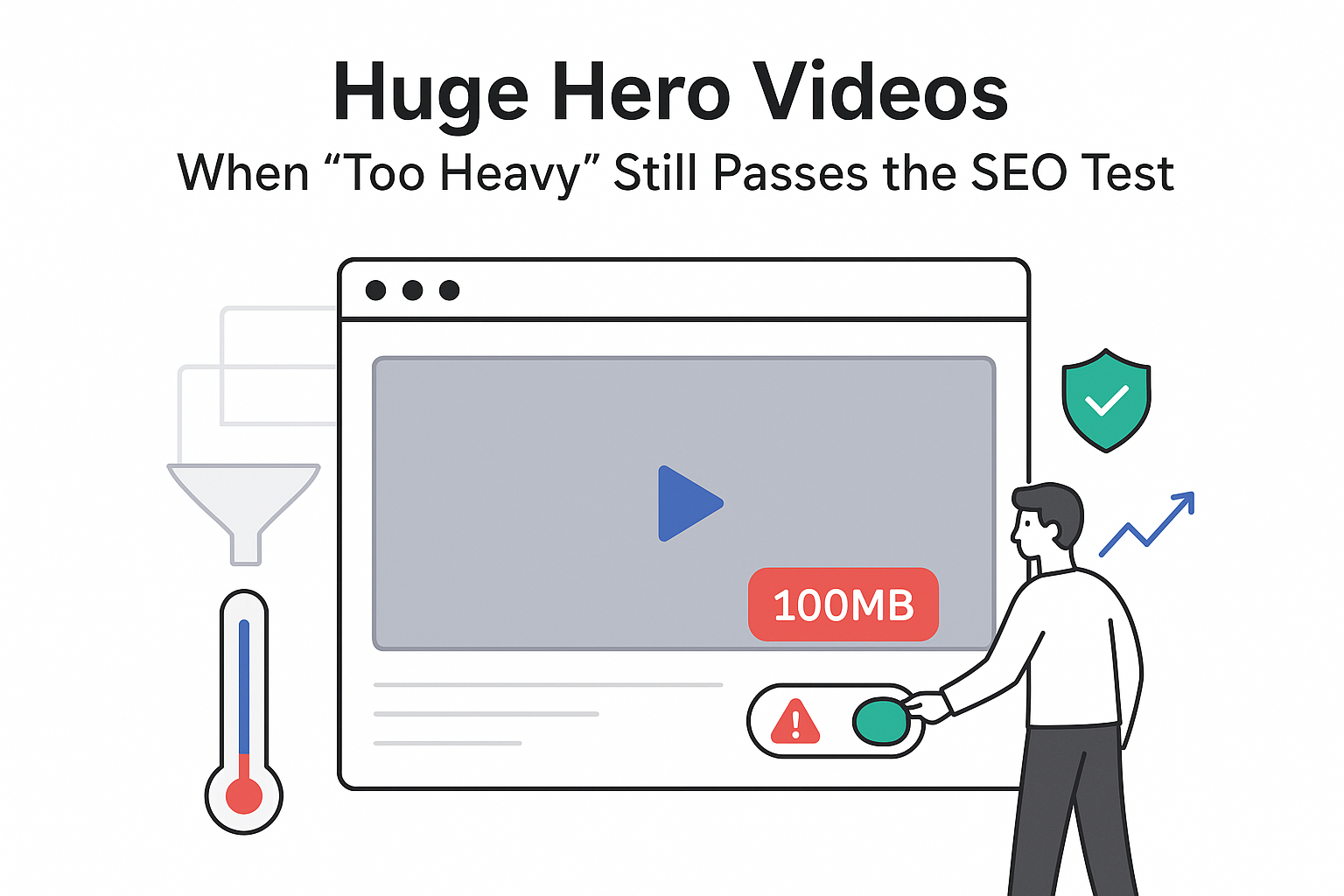
Google Search Advocate John Mueller addressed SEO concerns about large background videos in a discussion on Reddit’s r/SEO. He responded to a site owner who asked about a 100 MB hero video that loads after the main content. His comment, later reported by Search Engine Journal, indicated that this setup is unlikely to cause a noticeable SEO impact.
Background video loading and SEO
The Reddit question described a page where text and images render within seconds, creating a complete visual layout for users. A 100 MB background video then continues loading and eventually replaces the hero image. The site owner wanted to know whether this approach could hurt search rankings or Core Web Vitals metrics.
Mueller replied that he does not expect an SEO impact from this configuration.
I don't think you'd notice an SEO effect.
He did not suggest any penalty or special handling for such background videos when primary content loads promptly.
Key details of Mueller's comment
- The implementation loads text and a hero image first, presenting a complete layout before the video transfer begins.
- The video file size described by the site owner is 100 MB.
- The video loads asynchronously and later replaces the hero image once loading finishes.
- Mueller's answer addressed whether this pattern affects search rankings when users can already see primary content.
- Search Engine Journal summarized the exchange, quoting his statement that he does not expect a noticeable SEO effect.
Background context: lazy loading and Core Web Vitals
Google's documentation on lazy loading video recommends deferring non-critical media to improve page performance. For non-autoplay video, it advises setting the preload attribute to none so browsers avoid downloading data until needed. The same web.dev documentation suggests using a poster image as a placeholder while the video file loads.
For autoplaying videos, the article recommends using the Intersection Observer API to load sources when elements enter the viewport. This approach delays network requests until users are likely to see the video and helps maintain visual impact while controlling initial load performance.
Google's lazy loading guide explains how deferred content can remain visible to crawlers. It recommends server-side rendering or providing fallback markup that includes important text and links. The guide also advises testing with tools such as URL Inspection to confirm that Googlebot can access lazily loaded content.
Google states that Core Web Vitals are a set of metrics that apply to all web pages. They currently include Largest Contentful Paint, First Input Delay, and Cumulative Layout Shift, which measure loading speed, interactivity, and visual stability.
Source citations
- John Mueller's Reddit comment on background video loading: r/SEO thread.
- Google's guidance on lazy loading video: web.dev article.
- Google's Search documentation on lazy loading content: Search Central guide.
- Overview of Core Web Vitals metrics: web.dev Core Web Vitals.








.svg)

.svg)
.svg)