
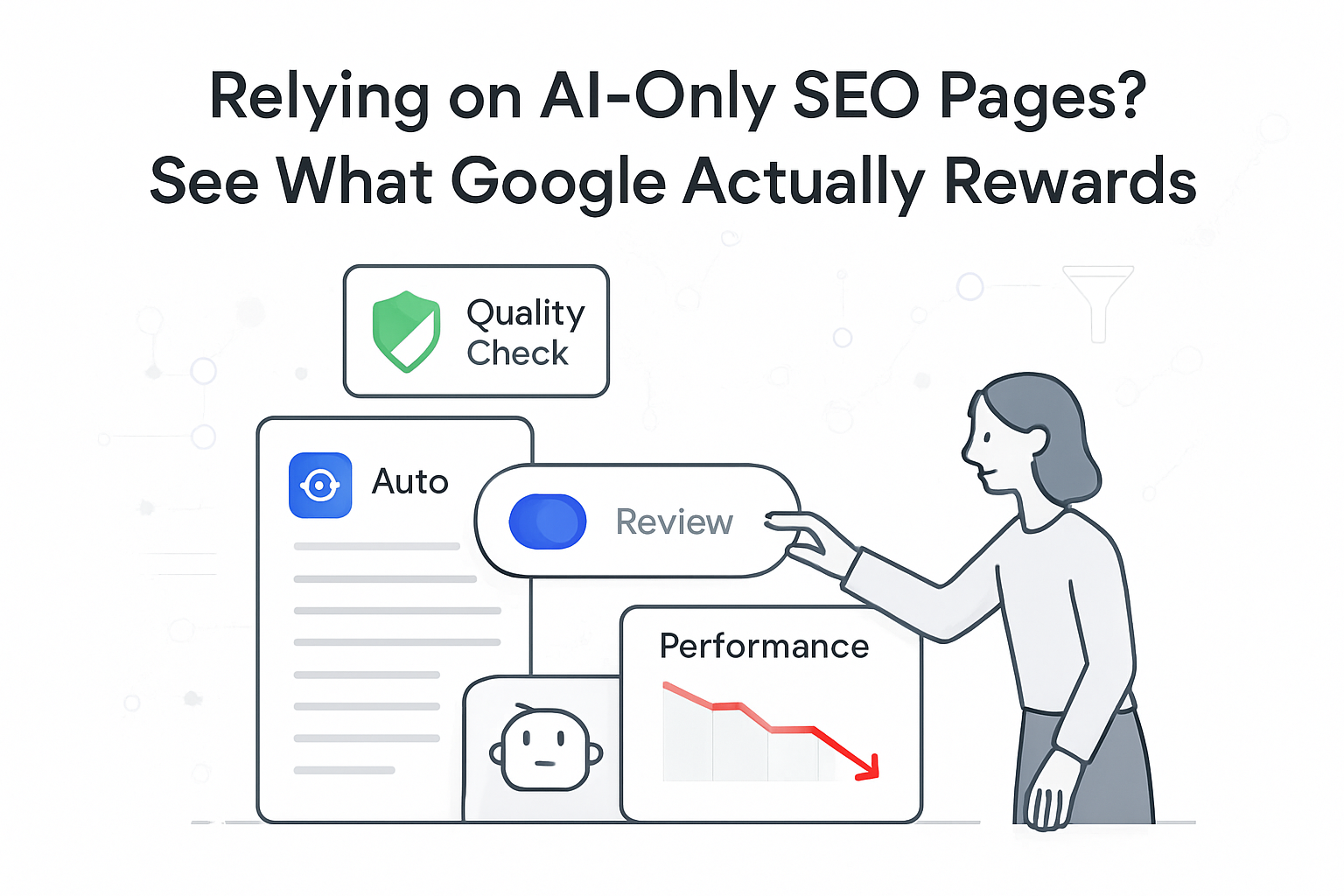
Google Search Advocate John Mueller has publicly questioned whether publishers need LLM-only Markdown or JSON pages. He made the comments in a Bluesky exchange with SEO professional Lily Ray about AI-focused content formats. The discussion centers on whether large language models require separate bot-facing versions of web pages instead of standard HTML.

Key details: Google’s Mueller on LLM-only Markdown pages
On Bluesky, Lily Ray asked whether publishers should create separate Markdown or JSON pages specifically for large language models. She described these as pages served only to bots, not to human visitors. Her initial question remains publicly accessible.
Mueller replied that he was not aware of any Google requirement for separate LLM-only Markdown or JSON pages. He said LLMs have long trained on normal HTML pages and can parse standard web content. In his words, he asked, “Why would they want to see a page that no user sees?”
Responding to a follow-up about speeding up AI understanding, Mueller added that he doubted file format alone would change output quality.
- He noted that if specific file formats improved AI responses, system providers would likely communicate those benefits clearly.
- He commented that AI companies are not known for being shy about such advantages.
- He said he could imagine pages working differently for users and AI systems, but not because of HTML versus Markdown.
- He added that JavaScript-heavy pages still seem challenging for many current AI systems.
Ray also discussed vendor pitches for this approach in a related thread happening on X on November 23, 2025. That discussion focused on companies promoting services that generate separate machine-readable page versions.
Background: structured data and AI product feeds
Other contributors in the conversation highlighted situations where AI platforms have documented JSON feed specifications. In the same thread, Wright explains that OpenAI eCommerce product feeds used for shopping-related experiences in ChatGPT rely on a published schema that defines how product data should be structured for ingestion.
Wright wrote that “JSON schemas appear to have a key role in AI search already,” referring to these product feeds. He contrasted this documented approach with speculative proposals for unpublished LLM-only page formats.
In a separate LinkedIn post, Chris Long observed that editorial sites using product schema often appear in ChatGPT citations. He wrote that “editorial sites using product schemas, tend to get included in ChatGPT citations.” That post was cited in Wright’s Bluesky reply as another example of structured data influencing AI-driven displays.
Source citations
- Lily Ray’s Bluesky question on LLM-only Markdown and JSON pages for LLMs
- Lily Ray’s related X thread about vendor pitches for LLM-focused pages (November 23, 2025)
- John Mueller’s initial Bluesky reply on LLMs handling normal HTML pages
- John Mueller’s follow-up Bluesky comment on file formats and AI companies’ communication
- John Mueller’s additional Bluesky remark on pages for users versus AI systems and JavaScript
- Matt Wright’s Bluesky reply referencing OpenAI product feed schemas and AI search
- OpenAI’s official product feed specification document
- Chris Long’s LinkedIn post on product schema use and ChatGPT citations







.svg)

.svg)
.svg)