
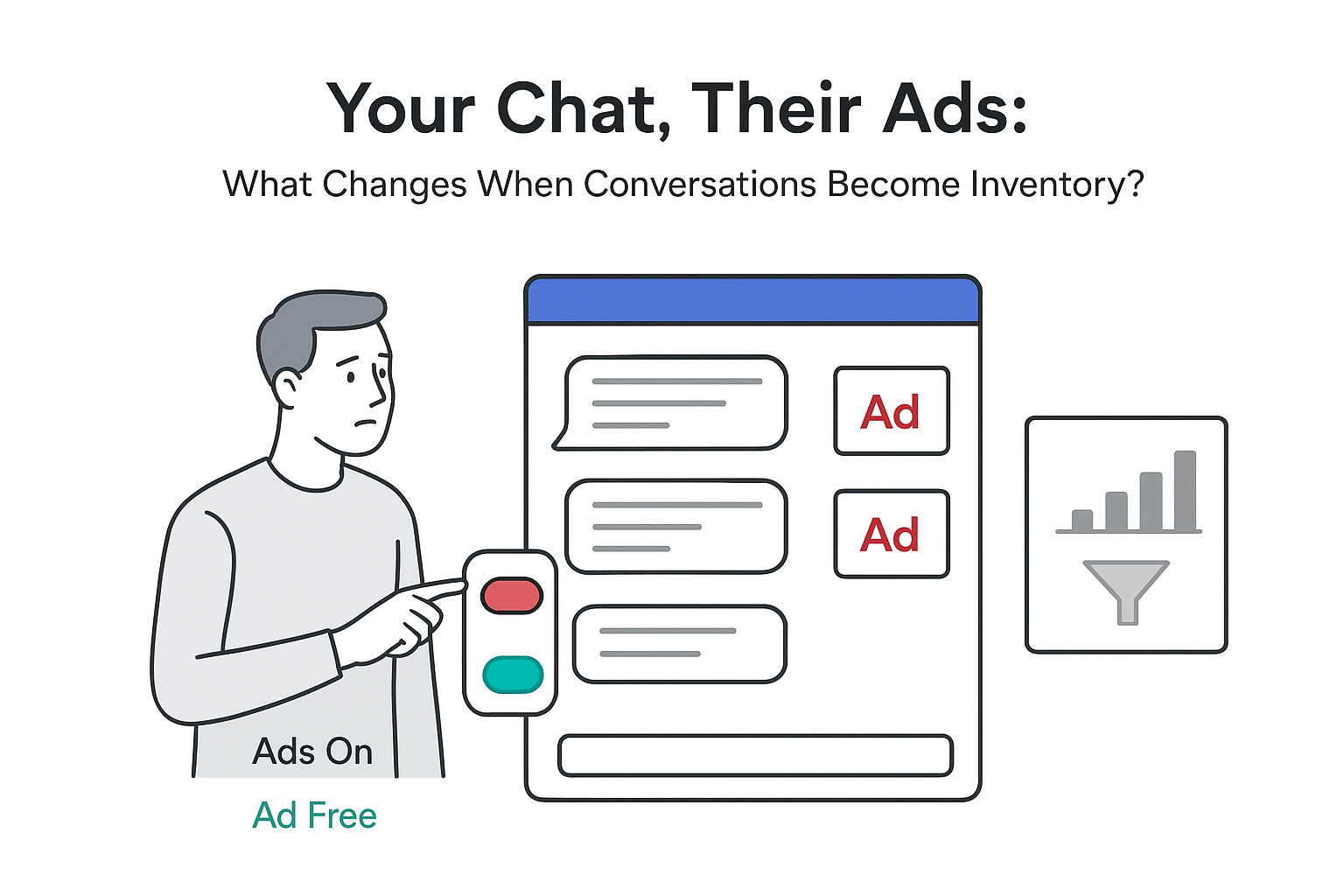
OpenAI will begin testing advertising placements inside ChatGPT for Free and Go users in the United States. The company outlined the trial, privacy rules, and subscription impacts in an official post on its website.
ChatGPT ads test in the United States
The ad test will involve selected ChatGPT Free and ChatGPT Go users based in the United States. ChatGPT Pro, Business, and Enterprise subscriptions will remain ad-free under the current plan.
Key details of the test include:
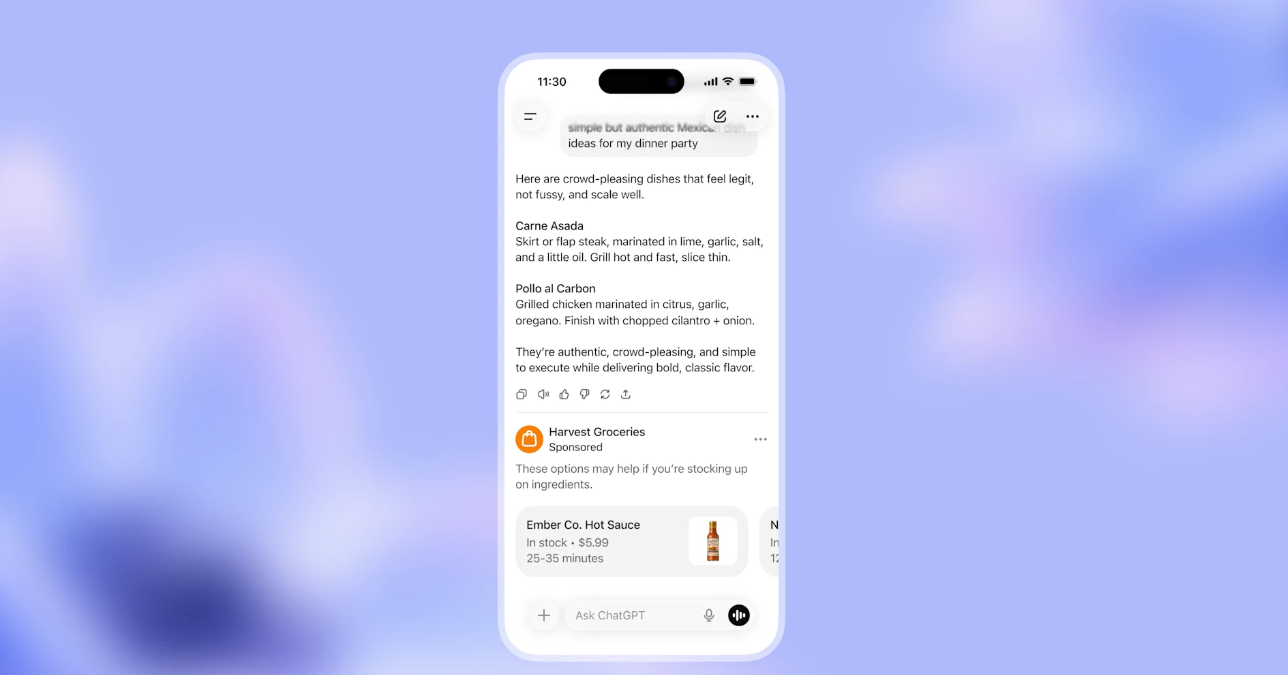
- Ads will appear only below ChatGPT responses, not inside model-generated text.
- Ads will show only when there is a relevant sponsored product or service related to the active conversation.
- Sponsored messages will be clearly labeled, visually separate from answers, and can be dismissed by users.
- Users under 18 will not see ads in ChatGPT.
- Ads will not run near sensitive or regulated topics, including health, mental health, and politics.
- The program will start as a limited test rather than a full advertising rollout.
Data use, privacy, and answer independence
OpenAI says advertising will not affect how ChatGPT generates responses. Answers are produced first, and ads are selected only after the model has finished its reply.
Conversation content will not be shared with advertisers, and OpenAI states that it does not sell user data. Users will be able to see why an ad appeared and can disable ad personalization if they choose.
ChatGPT Go launch and subscription structure
OpenAI confirmed that the ChatGPT Go subscription tier is now available in the United States. The plan costs $8 per month and sits between the free service and higher priced subscriptions.
According to the company, ChatGPT Go increases message limits compared with the free tier and supports image generation, file uploads, and the memory feature that stores user preferences.
OpenAI says ad revenue will help support ongoing access for Free and Go users, while Pro, Business, and Enterprise tiers are intended to remain free from advertising.
Initial ad formats and official sources
OpenAI shared example ad formats as part of its announcement. In one example, a conversation about a Mexican dinner party is followed by a sponsored grocery product recommendation displayed under the response.
Another example shows a travel conversation about Santa Fe, New Mexico, followed by a sponsored lodging listing. In both cases, ads appear beneath the main answer, are labeled as sponsored, and remain visually distinct from the chat content.
OpenAI described the testing program and related policies in its blog post, “Our approach to advertising and expanding access,” which outlines eligibility, placement rules, privacy commitments, and the focus on a limited United States test, available on its website.
The company says ad tests will begin in the United States in the coming weeks and that it will adjust how ads appear based on user feedback gathered during the trial.






.svg)

.svg)
.svg)