
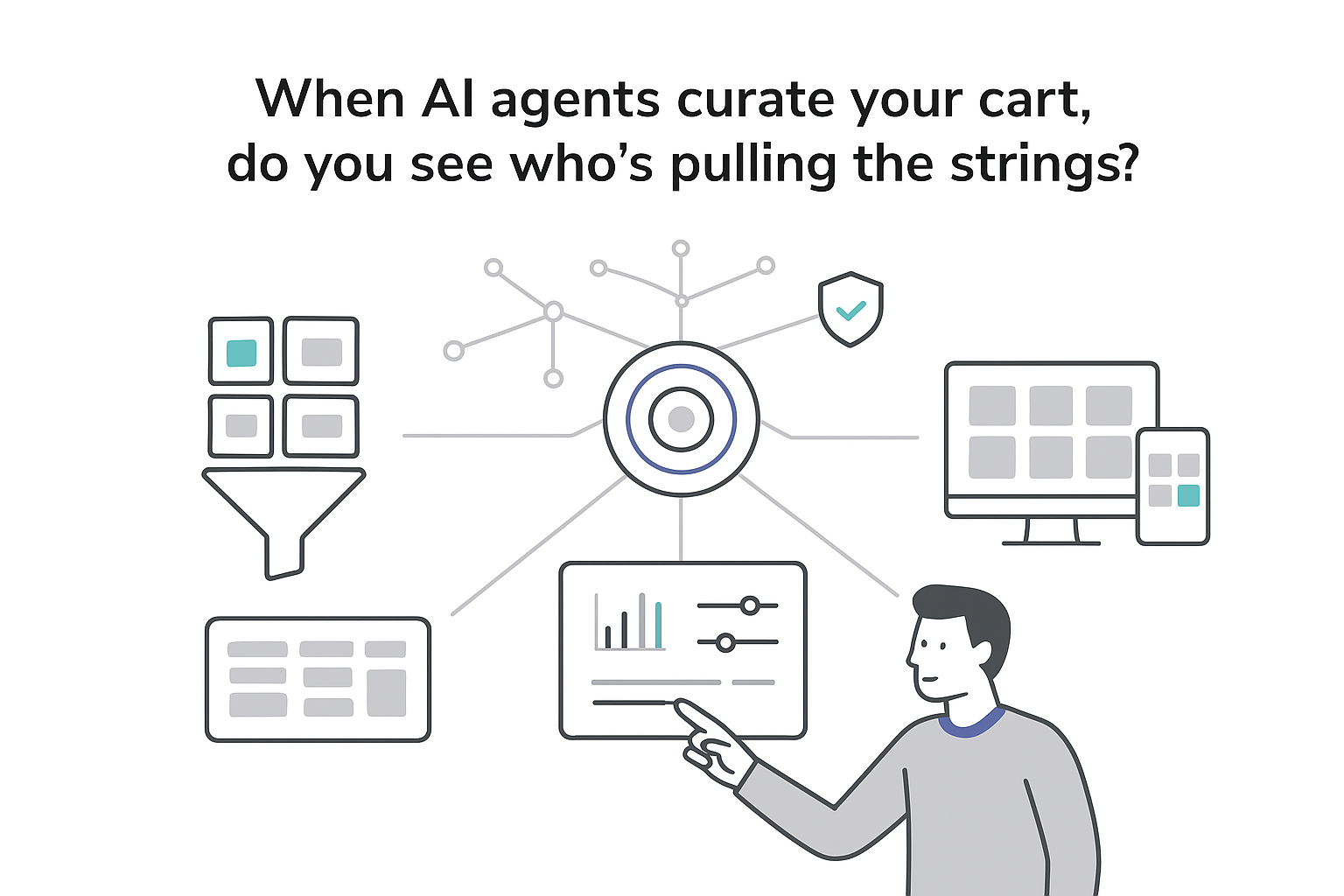
Shopify president Harley Finkelstein has shared new information on the Universal Commerce Protocol (UCP) in a recent podcast interview. He described how the open protocol is intended to support agentic AI shopping across multiple platforms and brands. The discussion focused on personalization, merchant control, and access for retailers that do not currently use Shopify.

Universal Commerce Protocol (UCP)
Finkelstein described the Universal Commerce Protocol as an open source "universal language" for merchants and AI shopping agents. Co-developed with Google, it is intended to work across many agent interfaces so that agent-based shopping can be as capable as a merchant's own online store.
Key details Finkelstein described include:
- UCP is designed as a standardized way for merchants to communicate with AI agents.
- Merchants can specify how products should appear inside chat-based and agent-based shopping experiences.
- The protocol supports loyalty features, subscriptions, and product bundles.
- Merchants can manage delivery preferences, such as avoiding specific days, through the protocol.
- Shopify has already enabled shopping via ChatGPT and now plans to extend access through UCP.
- Shopify intends to connect UCP-powered shopping with Gemini, AI mode in Google Search, and Microsoft Copilot.
According to Finkelstein, UCP allows more detailed merchandising inside AI chat interfaces than was previously possible. He said merchants can adjust catalogs, remove products, or change descriptions and have those updates reflected across connected agent platforms. He framed UCP as a way to keep product data synchronized across multiple AI-powered shopping channels.
Agentic commerce access beyond Shopify
Finkelstein explained that Shopify will offer an "Agentic" plan for brands that do not run their online stores on Shopify. Under this plan, enterprise merchants can upload product data into Shopify's infrastructure so it can be discovered by AI agents.
He said these products can then be syndicated and indexed for agent-based shopping without requiring a full platform migration. Finkelstein emphasized that agentic shopping should include as many brands as possible, not only those already on Shopify.
Broad brand coverage, he argued, is important for consumers who rely on AI agents to compare products. He framed this openness as a way for brands that are still migrating platforms to participate immediately in agentic shopping channels.
Merit-based personalization, SEO, and adoption outlook
Finkelstein repeatedly used the term "merit-based shopping" to describe how agentic systems recommend products. He contrasted this with advertising-led placements and said recommendations would be based on user context and preferences rather than paid visibility. He noted that large language models can learn individual tastes over time and match products more closely to those patterns.
On search optimization, Finkelstein said he does not expect traditional SEO approaches to operate the same way in agentic environments. Instead, he suggested brands will focus on maintaining accurate and frequently updated UCP catalogs for AI agents. He also indicated that merchandising and catalog teams may become responsible for how products are described to agents.
Finkelstein said he expects people will use agentic shopping some of the time at first, with adoption growing gradually. Once a shopper has a positive experience with an AI agent, he argued, friction decreases for future sessions. He also said he sees potential for the approach to surface lesser-known brands that closely match a user's specific needs.
Source: Martinibuster.com




.svg)

.svg)
.svg)