
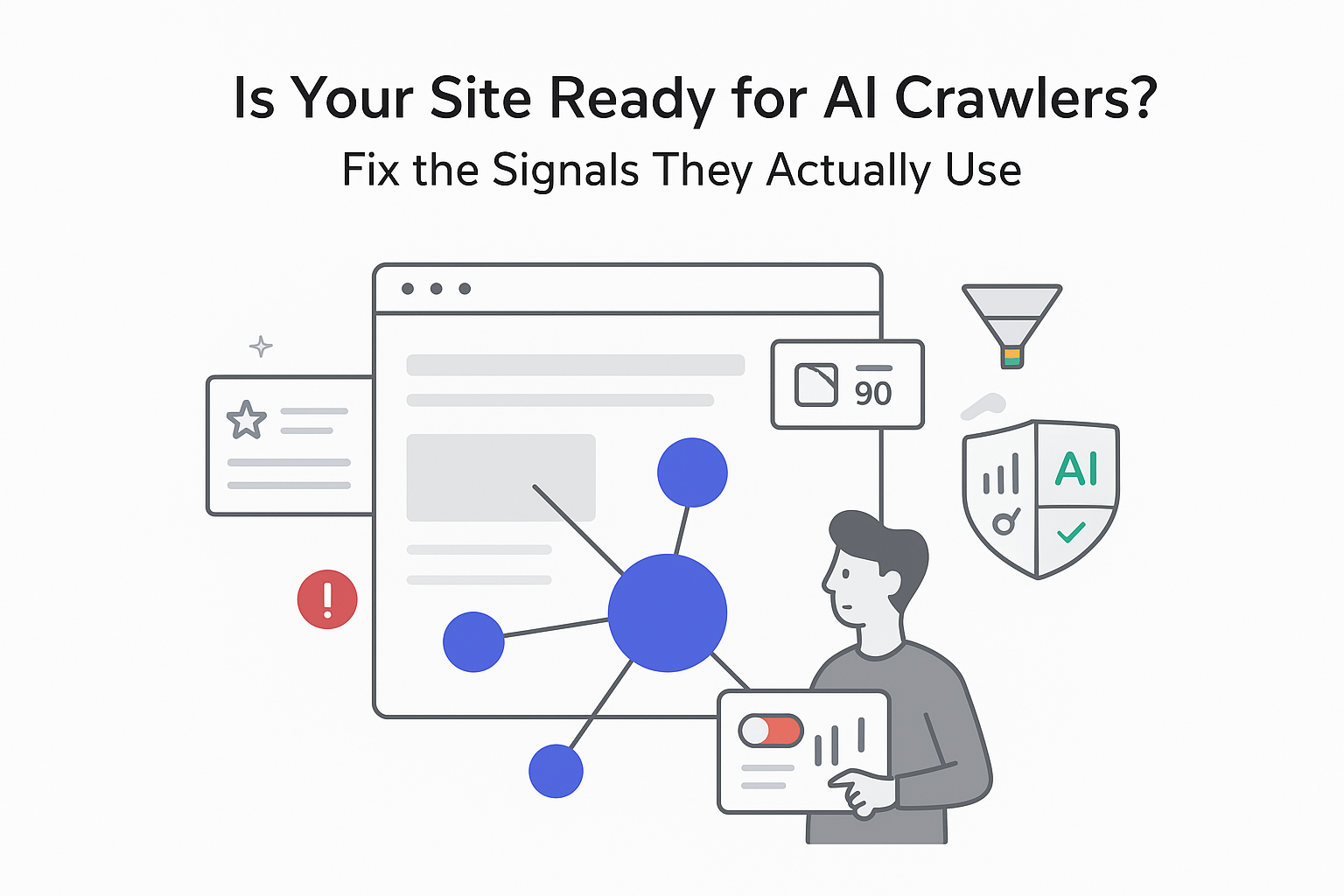
James LePage, Director, Engineering AI, at Automattic and co-lead of the WordPress AI Team, has outlined how he expects SEO to work for AI agents, focusing on how publishers should structure content so automated systems can reliably find and interpret it.
In his essay Agents & The New Internet (3/5) on his site j.cv, LePage argues that agents will operate on top of the same web infrastructure that powers search today, with direct implications for site architecture and content strategy.

AI agents and existing web infrastructure
LePage writes that AI agents depend on the same underlying systems that support current web search. He identifies four key elements: search to discover relevant entities, domain-level trust signals, links between entities, and page content. In his view, agents obtain most of their data from established search indexes rather than through a separate crawling system.
He describes agents as using search, domain authority signals, links, and page content to evaluate and navigate sources. According to his article, ChatGPT relies on Bing for web search, Anthropic systems use Brave Search for similar retrieval tasks, and Google exposes information to its agents through Google Search.
LePage concludes that the mechanics of the web stay largely constant while agents, not users, perform more of the traversal and synthesis on top of that infrastructure.
Content structure and long-tail optimization for AI
LePage argues that AI intermediaries that synthesize results need content that is structured, explicit, and easy to parse. He highlights clear schemas, strong semantic signals, and internal links as elements agents can interpret more reliably. In his view, many AI-focused tactics look similar to traditional long-tail keyword optimization rather than a distinct new discipline.
He offers several practical recommendations for site and content structure:
- Use structured markdown and clean semantic markup so agents can consistently identify sections and headings.
- Organize pages with clear hierarchies and use internal links to show how topics relate to each other.
- Lead with concise summaries, followed by progressive layers of detail that agents can traverse as needed.
- Indicate which information is primary and which is supplementary, for example through rankings or ordered lists.
- Ensure each page communicates its purpose clearly so automated systems can match it to specific user tasks.
LePage also describes how he expects agent behavior to evolve. He writes that current systems resemble Perplexity-style web search, where agents gather content, generate a synthesis, and present results while users take actions themselves. He predicts a shift toward agents that can complete purchases or bookings under user guidelines, with users reviewing and approving outcomes.
Looking further ahead, he suggests that websites may eventually host their own agents that coordinate directly with external agents. At that point, he expects content to be stored separately from presentation and accessed by agents in a more direct, structured way.
Source citations
This summary is based on James LePage's article Agents & The New Internet (3/5), published on his site j.cv. In that piece, he details his views on AI agents, SEO, and content structure in his own words.




.svg)

.svg)
.svg)