
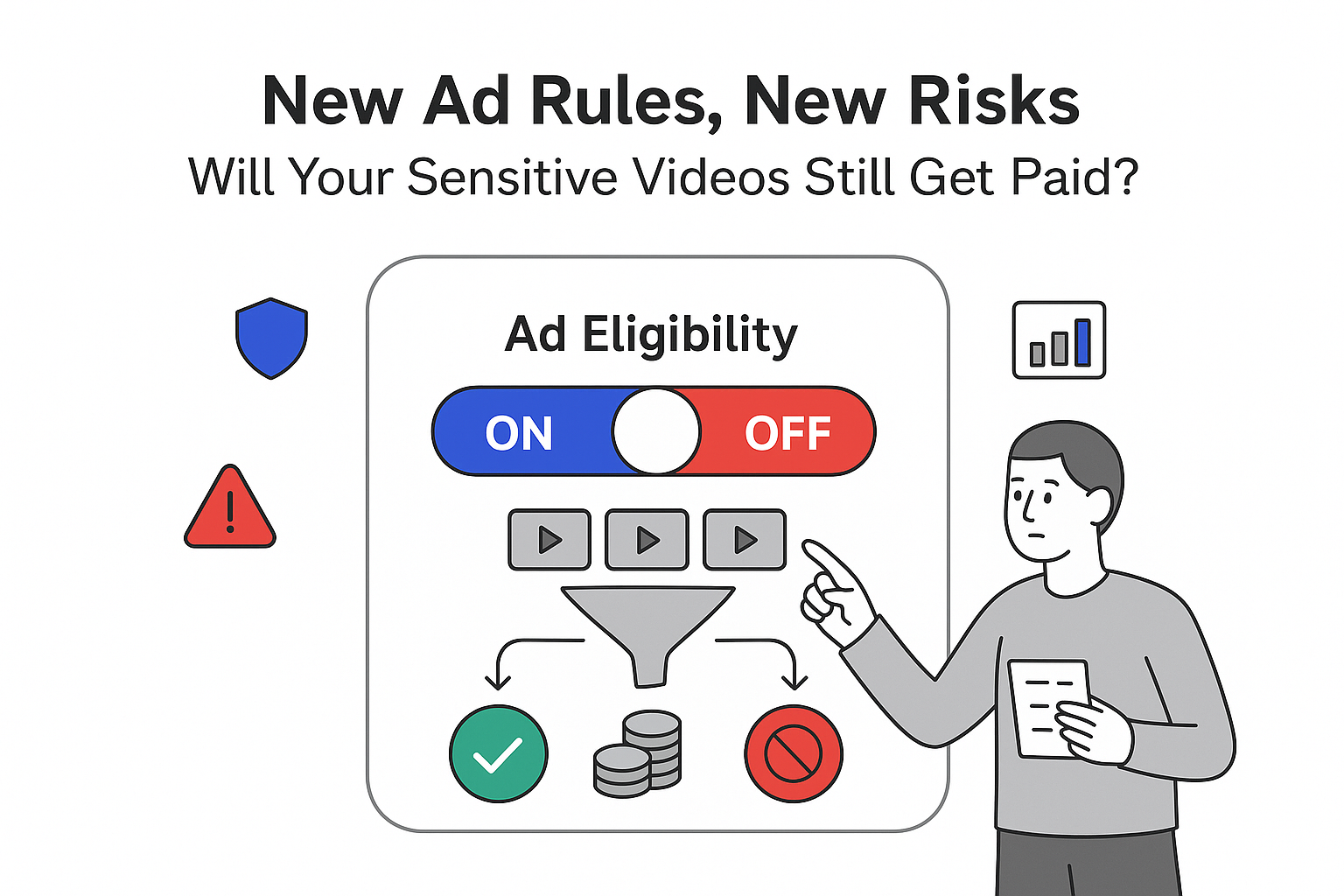
YouTube has updated its advertiser-friendly content guidelines for certain controversial topics. The changes expand eligibility for full ad monetization on some non-graphic dramatized or discussion-based content about these issues. YouTube outlined the update in a Creator Insider video and in an updated Help Center policy.
Key details of YouTube's controversial issues monetization update
Under the revised advertiser-friendly content guidelines, some controversial topics can now receive full ads when they are presented in a non-graphic way. This includes dramatized scenarios and informational discussions that avoid graphic imagery or explicit depictions of harm.
- Some non-graphic dramatizations and discussions of controversial issues may receive full monetization.
- Policy examples include abortion, self-harm, suicide, domestic abuse, and adult sexual abuse.
- The Help Center explains that non-graphic yet descriptive or dramatized content on these topics can still earn ad revenue.
- YouTube distinguishes between content where these topics are the main focus and content where references are brief or incidental.
- Content that mentions such issues only in passing is treated differently from videos that center the subject in a sustained way.
- Content focusing on child abuse or eating disorders remains ineligible for full monetization under the update.
Background on YouTube's advertiser-friendly policy changes
Previously, YouTube often restricted monetization for videos centered on controversial issues, regardless of whether the content was graphic or fictional. The recent Help Center policy update specifies that non-graphic dramatized or discussion-based content on certain topics can now qualify for ad revenue. The change is reflected within YouTube's Advertiser-friendly content guidelines and the controversial issues monetization guidance.
YouTube defines controversial issues as topics associated with trauma or abuse, including child abuse, adult sexual abuse, sexual harassment, self-harm, suicide, eating disorders, domestic abuse, and abortion. Within this list, the policy distinguishes which categories may receive ads when presented non-graphically and which remain restricted.
The guidance also clarifies what counts as content that focuses on these issues. A sustained segment or full-video discussion is treated as focal, while a brief or isolated mention is treated as fleeting. This distinction affects how strictly monetization rules are applied.
Official sources and documentation
YouTube has published several primary sources that explain the update and provide examples for creators and advertisers.
- Advertiser-friendly content guidelines outline YouTube's overall rules for monetizable content and advertiser preferences.
- Help Center policy details how controversial issues affect ad eligibility and includes category-specific examples.
- Creator Insider video walks through the guideline changes and how they apply to non-graphic content on sensitive topics.








.svg)

.svg)
.svg)