
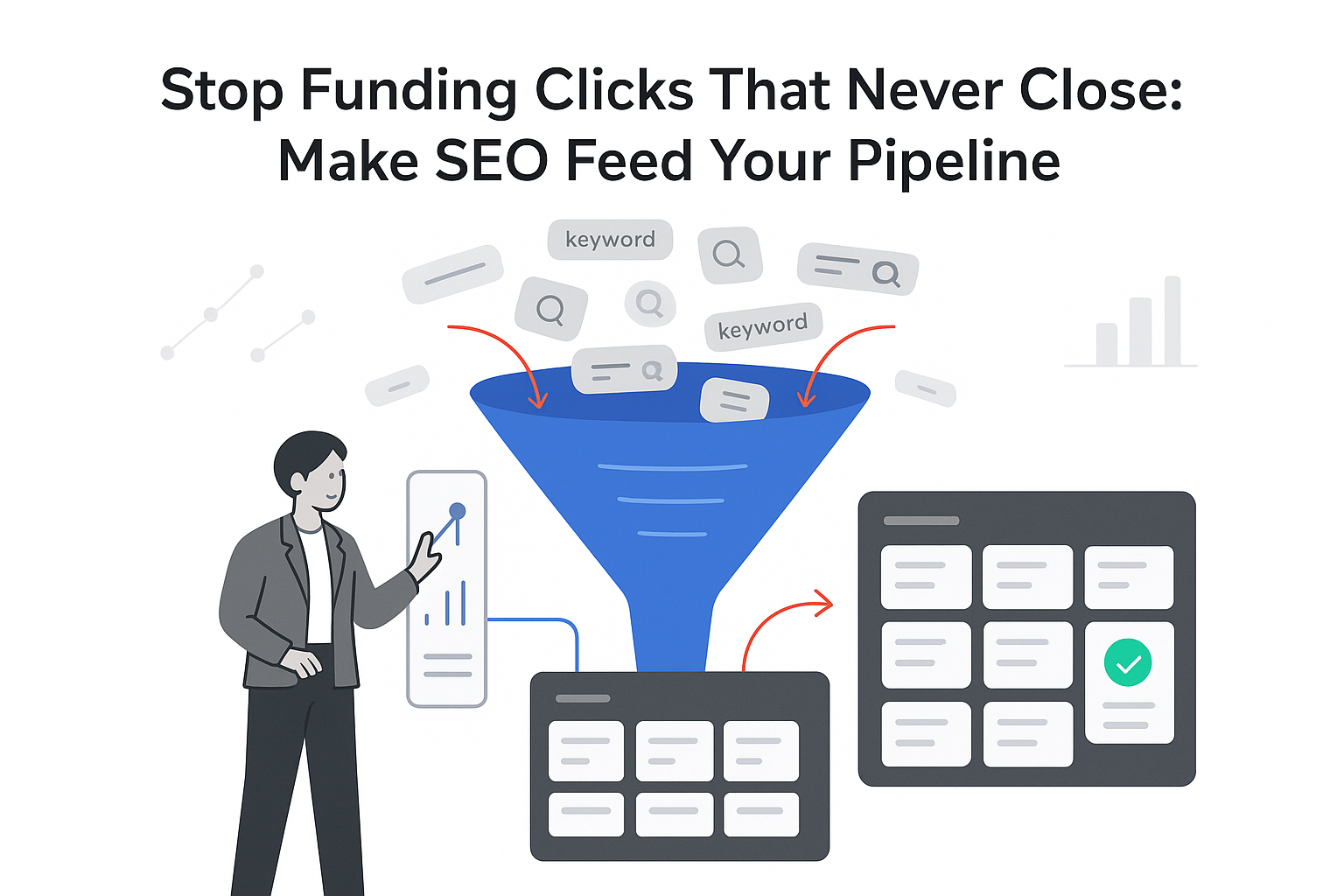
Organic search should be the quiet workhorse in a marketing mix. No drama, no constant budget tweaks - just a steady flow of prospects who are actively looking for help and already have context for what you do. For many B2B service companies, though, SEO still feels foggy, slow, and suspiciously close to a money pit.
I wrote this guide for founders and CEOs running B2B services in roughly the $50k-$150k/month range who want SEO that ties cleanly to pipeline, not just pageviews.
Key takeaways: B2B SEO for service-based companies
- B2B SEO is about pipeline, not traffic. I care far more about sales-qualified conversations and proposals from the right accounts than “more visitors.”
- Timelines are usually predictable when fundamentals are right. I typically expect early leading indicators in ~3-4 months (ranking lifts, better-fit queries, more “found you on Google” mentions) and meaningful pipeline impact in ~6-12 months, depending on competition and your starting point.
- Organic can become a major pipeline contributor once it matures. In many B2B service businesses with consistent execution and solid sales follow-up, organic search often becomes one of the top sources of qualified inbound opportunities over time (I’ve commonly seen it land around the 25-40% range, but the only number that matters is what your CRM attribution proves).
- You don’t need a huge internal team. In practice, one decision-maker for direction, a subject matter expert for accuracy reviews, and occasional website support is usually enough to keep progress moving.
- Your involvement is front-loaded. The first 30-60 days require more input on ICP, positioning, and sales process; after that, most work shifts to execution and iteration.
- SEO compounds while paid channels reset. Paid search stops when spend pauses; SEO keeps producing from the same pages and earned authority - especially for high-intent service queries.
What B2B service SEO is (and what makes it different)
B2B service SEO is the practice of turning search demand into qualified leads and sales opportunities for companies that sell expertise rather than products - agencies, consultancies, IT services, engineering firms, legal or financial providers, and similar businesses.
The goal is straightforward: I want the right decision-makers to land on the right pages at the right stage of the buying process, then move toward a contact request, demo, discovery call, or proposal conversation.
This looks different from other SEO categories because B2B service search tends to be low-volume but high-value, involves multiple stakeholders, and supports longer sales cycles. Buyers also do heavy validation: they look for proof, specifics, and credibility signals that say, “You’ve done this before for companies like mine.”
To match how buyers actually research, B2B service sites tend to perform best when they’re built around a small set of page types that map to intent:
- Core service pages (one per offer, built to convert)
- Industry/vertical pages (proof you understand their context)
- Role-based pages (when the buyer persona meaningfully changes the argument)
- Case studies (searchable, specific, and not hidden in PDFs)
- Comparison pages (in-house vs outsourced, approach A vs approach B, and alternatives)
- Educational resources (guides and articles tied to real search questions)
How B2B SEO pays off (ROI, risk, and budget reality)
The blunt question I hear most is: “Do I really need SEO, or should I keep putting money into paid and outbound?”
I think that’s a fair question - especially if you’ve seen SEO measured with vanity charts instead of revenue. The “right” answer usually comes down to product-channel fit: whether SEO can reliably reach your buyers and whether your site can convert that attention into qualified conversations.
I evaluate B2B SEO ROI through four lenses: how it affects blended acquisition cost over time, whether it increases inbound conversations from high-intent searches, whether it improves close rates (because buyers pre-qualify themselves through content), and whether it protects category positioning when competitors dominate page one. If you want a stricter approach, build around measuring pipeline impact of SEO rather than broad “organic sessions.”
Compared to PPC and outbound, the trade-off is mostly timing and where the risk sits. PPC and outbound can create faster spikes, but costs stay directly tied to each click or activity. SEO usually ramps more slowly, but once high-intent pages rank, the marginal cost per additional qualified visit trends down. In B2B, this matters even more because buying committees rarely convert in one touch - search often starts the relationship, then sales and other channels finish it.
Budget is contextual, but it helps to think in terms of consistency rather than a magical number. Many B2B service firms allocate a meaningful slice of their marketing budget to SEO and content (often in the 10-20% range) because it’s not just “blog posts” - it’s service page quality, proof assets, technical upkeep, and authority building. If investment is too light or too sporadic, SEO can still improve fundamentals, but the timeline stretches. If you want a simple way to sanity-check spend against outcomes, use budget-to-pipeline math tied to deal size and close rates.
A simple numeric example makes the point. If you sell a retained service at $8,000/month and the average client stays 12 months, one deal is worth $96,000. If, after sustained work, you win page-one visibility for a set of high-intent queries and that visibility produces even one additional closed client per month, payback can be significant. Even at half that performance, SEO can still be attractive because the same assets keep working while you refine conversion paths and qualification.
I also see a common progression in results: early months focus on fixing blockers and publishing core pages; the middle period starts producing qualified inquiries that explicitly cite search; and months 7-12 is where rankings, conversion rates, and sales follow-up start to create something that feels repeatable.
A practical 2025 framework I use for B2B service SEO
When a B2B service business is in the $50k-$150k/month range, I don’t think the answer is a “massive SEO program.” The answer is a tight system that matches how you sell - and stays accountable to pipeline.
I break it into five stages:
- Foundations (technical and structural basics that remove friction)
- Buyer-led keyword strategy (ICP-first, mapped to intent and sales stages)
- Content engine (service pages, proof, comparisons, and education that converts)
- Authority and links (credible mentions in places your buyers already trust)
- Measurement and scaling (pipeline attribution, iteration, and expansion)
Foundations: technical essentials that matter for service sites
You don’t need to be a developer to steer technical SEO. I focus on a few fundamentals: whether important pages are crawlable and indexable, whether the site structure makes services and proof easy to find, whether pages load quickly enough to avoid drop-off, and whether mobile experiences are clean (a lot of B2B research happens on phones outside work hours).
For service companies, I often see the same issues repeating: thin service pages that try to cover everything at once, case studies buried under vague navigation labels or trapped in PDFs, and near-duplicate “solutions” pages that confuse both search engines and buyers. When you publish or restructure, keep your basics tight - sitemap coverage (see Google’s guide) and clear canonical signals (Moz has a solid guide) prevent a lot of avoidable confusion.
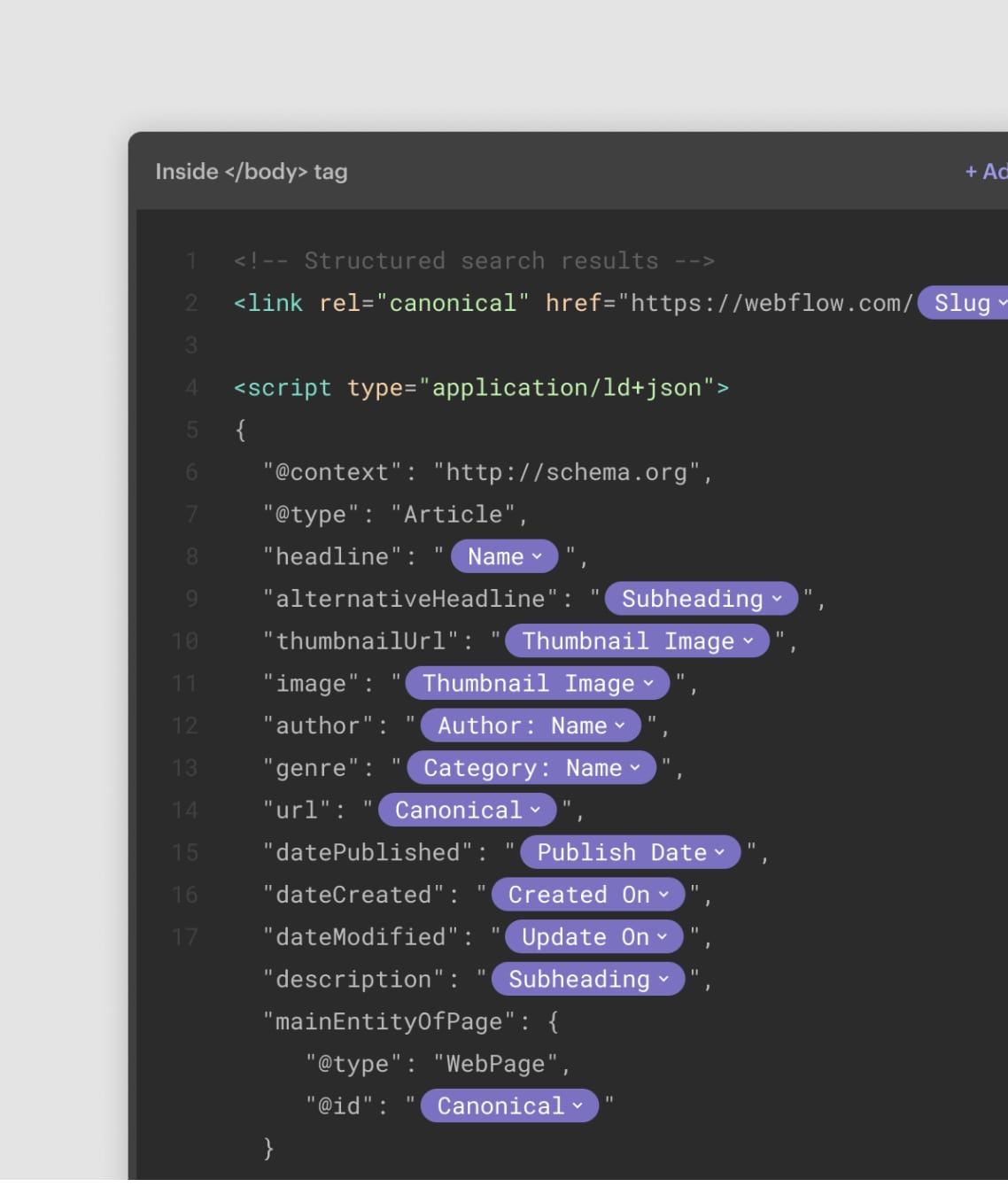
Structured data can also help clarify what your business is and what you offer (for example, organization and service markup). I treat it as an enhancer, not a substitute for clear page architecture and strong copy. If you want a quick way to generate JSON-LD, this is my favorite tool.
Buyer-led keyword mapping (without starting in a keyword database)
Good B2B keyword work starts with your ICP and the language that shows up in real sales conversations. I look for the phrasing buyers use when they describe the problem, how they compare options, what “pricing” language they use, and which industries consistently deliver the best margins.
From there, mapping keywords to intent keeps the plan grounded. Problem-aware searches tend to fuel educational content; solution-aware searches tend to map to service and industry pages; brand- or provider-aware searches tend to map to comparison pages, proof, and decision-stage content. The sweet spot for B2B services is often long-tail, high-intent terms that mirror the words used in proposals - sometimes only 10-50 searches per month, but tightly connected to revenue. If you need a practical way to prioritize, start with this high-intent keyword strategy.
Content that converts: what I build first (and what can wait)
If you’re early, you don’t need dozens of posts to start. I’d rather see a small set of high-quality core pages than a library of generic articles.
In many cases, the strongest starting foundation is: conversion-ready service pages, a few targeted industry pages, and several specific case studies that match your best-fit accounts. After that base is solid, educational content and comparison pages can scale the program - especially when they answer recurring pre-sale questions your team already gets on calls.
A key point: every SEO asset needs a natural next step. Sometimes that’s a contact path; sometimes it’s a proof asset; sometimes it’s a deeper guide that your sales team can share mid-deal. What I avoid is content that “ranks” but leaves buyers unsure what to do next.
Authority: earning links that actually help in B2B services
Even great content can underperform when a site’s authority is weak relative to competitors. For B2B services, link building works best when it’s relevance-first, not volume-first.
In practice, credible mentions often come from industry publications your buyers read, partner ecosystems, client-approved stories, podcasts or event pages that list guests and speakers, associations and trade groups, and a small number of legitimate niche directories. I avoid anything that looks like mass placement, generic article farms, or “too good to be true” link packages - because even when they work briefly, they tend to create risk without building real brand equity.
Measurement: tying SEO to pipeline (and proving it in the CRM)
Without clear tracking, SEO turns into opinion battles. I want measurement that a leadership team can trust: how organic contributes to qualified leads, sales-qualified leads, opportunities, and closed revenue.
At minimum, that means your website analytics and Search Console data are clean, and that your CRM captures source information consistently for form fills, demo requests, and inbound calls. I also recommend looking at both first-touch and assisted attribution because B2B buyers rarely convert in one session - organic often starts the relationship and gets “credited” later to another channel.
The KPIs I rely on most are the ones that map to pipeline:
- Organic-sourced or organic-influenced leads (defined clearly, not guessed)
- Organic SQLs (after sales qualification)
- Opportunities and pipeline value tied to organic touchpoints
- Closed-won revenue and ACV where organic played a meaningful role
- Win rate and sales cycle length for organic vs other channels
This is also where timeline expectations become real. Early months should show movement in coverage (more relevant queries, better rankings for priority pages). Months 4-8 is often where SQL consistency starts to appear if conversion paths and lead qualification are solid. By months 6-12, you should be able to point to specific opportunities and revenue where organic was a primary driver or a clear assist. If you want a tighter operating cadence for this, use a simple dashboard approach similar to measuring pipeline impact of SEO and review it alongside sales weekly.
SEO in 2025: AI-heavy search results and what still holds up
AI summaries and changing SERP layouts have altered how visibility works, but they haven’t removed the underlying buyer behavior. Decision-makers still search when they feel pain, still compare providers, and still click through when they need proof, pricing context, process detail, constraints, and risk reduction.
What I see losing ground is thin, generic content that says what everyone else says. What tends to hold up is specific, experience-based content that demonstrates real understanding of a niche, includes clear claims backed by examples, and matches the decision-stage questions buyers ask right before they shortlist providers. If you’re recalibrating for this shift, start with AI-assisted search visibility and make sure your pages earn trust fast.
What internal involvement typically looks like
One hidden reason SEO fails in service businesses is not “Google updates” - it’s unclear internal ownership. Someone needs to make decisions on positioning, approve industry-specific claims, and keep the program aligned with what sales is actually trying to close.
In a lean setup, I usually find three internal roles are enough: a senior decision-maker for priorities and trade-offs, a subject matter expert who can review accuracy a few hours per month, and occasional support for website changes. The more clearly those responsibilities are defined early, the easier it is to maintain momentum without SEO becoming a weekly fire drill.



.svg)

.svg)
.svg)