
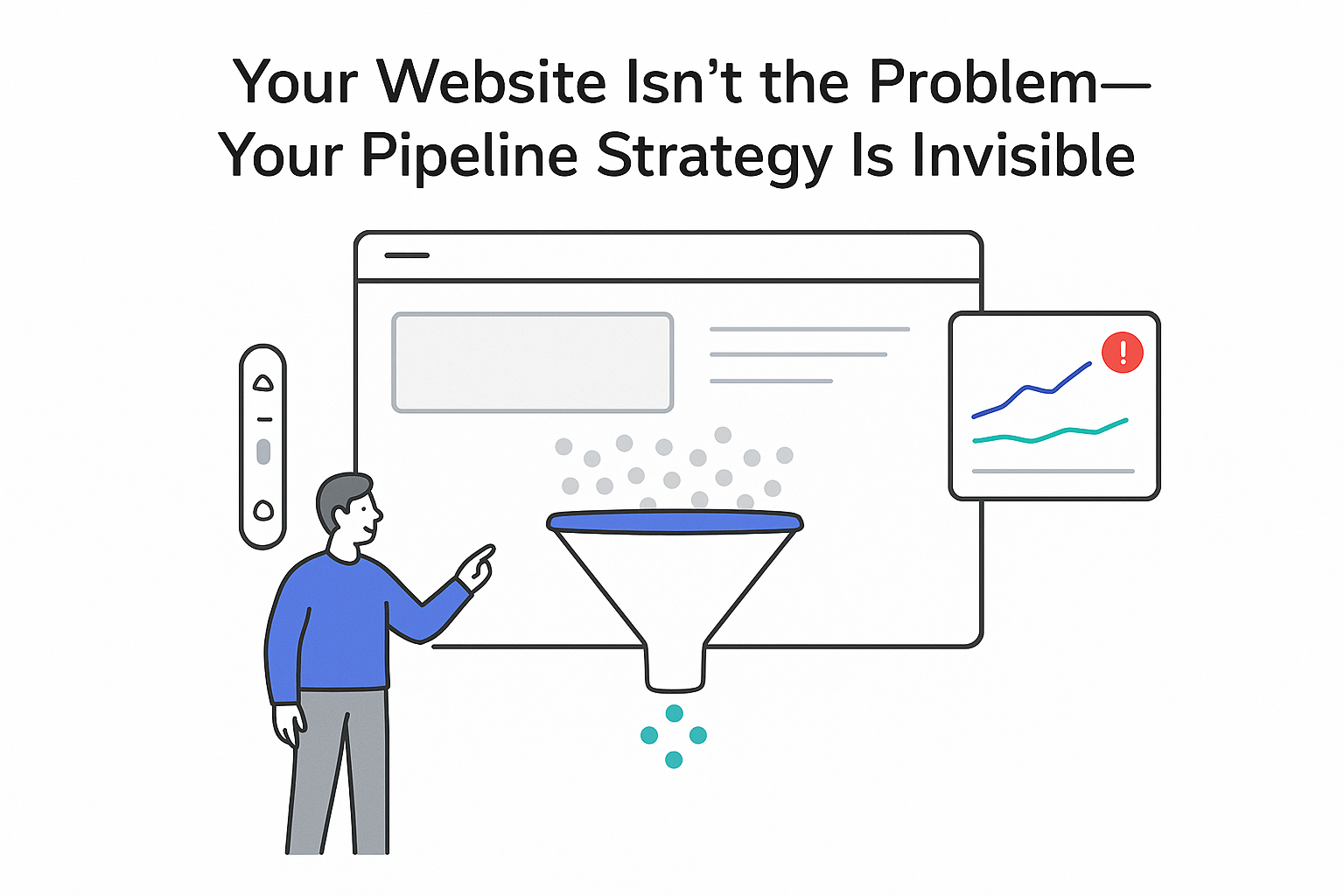
You have a solid B2B service company, a good team, and a handsome website. Yet organic leads are thin, and most of your pipeline still comes from paid or outbound. If that sounds familiar and you are sitting at roughly 50K to 150K MRR, this is exactly where B2B SEO for service companies starts to matter. Done well, it turns your site from a pretty brochure into a compounding inbound engine that supports real revenue targets instead of vanity metrics.
Why SEO matters for B2B service companies
If you are a CEO or founder, you probably do not care about title tags or schema. You care about lead quality, cost per opportunity, and whether your pipeline feels predictable. You also want any investment in B2B search engine optimization (SEO) to connect directly to those outcomes instead of fluffy dashboards.
That is where SEO stops being a technical project and becomes a growth lever. Effective B2B SEO for service companies is simply this: matching what your ideal buyers search for with content that proves you can solve their problems, then making sure that content is easy to find and fast to load.
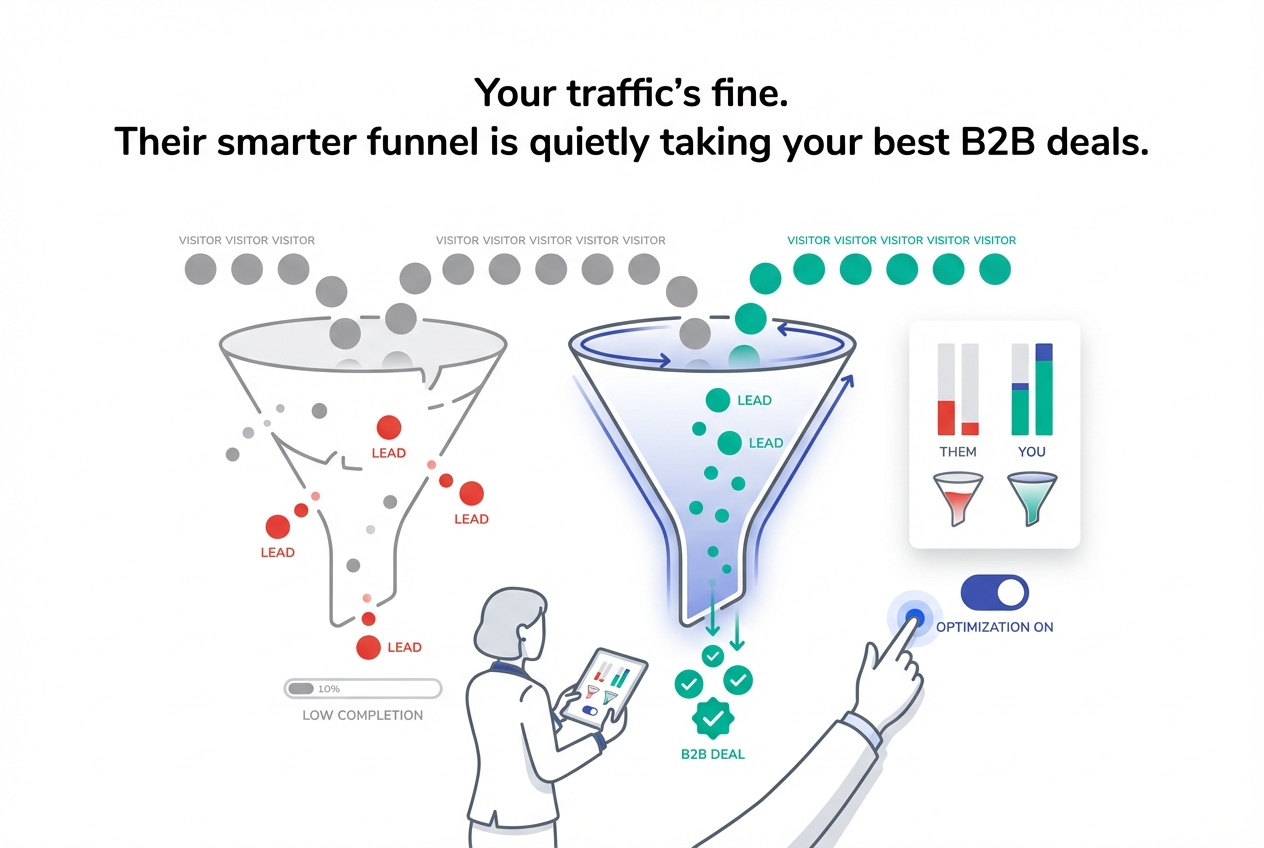
For a lot of teams, the issue is not effort; it is focus. They pour time and budget into design, campaigns, and sporadic content, but the site still does not generate the right conversations. Traffic without qualified leads is just a vanity number.
SEO, when treated as a revenue engine, helps you fix problems like:
- Lots of traffic, but almost no form fills or booked meetings
- Poor lead quality from generic, top-of-funnel content
- No consistent organic pipeline, so you lean on paid every month
- A beautiful site that wins design awards but loses visitors before they contact sales
- Content that talks about you instead of speaking to specific buyer pain
There is an important point here. You do not need more visitors. You need the right 500 people a month, not the wrong 5,000.
When I audit B2B websites that are not generating qualified leads from SEO, a common pattern emerges: the site was built mainly as a visual brand piece, not a lead-generating asset. Positioning is generic, there are no intent-focused pages for specific services or industries, the copy talks more about company history than buyer outcomes, and technical issues like slow load times or weak mobile experience quietly undermine both visibility and conversions.
In the rest of this article I stay focused on fixing exactly that, so organic search becomes a predictable inbound pipeline instead of a side project. You will see practical tactics your team can start using within thirty days, without turning you into a technical SEO expert or forcing you to micromanage every detail.
Positioning your brand with a B2B SEO strategy
Strong SEO does something slightly uncomfortable at first: it forces clarity. In my experience, you cannot build an effective B2B SEO strategy while staying vague about who you serve, which problems you solve, and why a prospect should trust you instead of the firm they already know.
Good SEO pushes you to define which industries bring the best deals and longest lifetime value, which specific problems your services actually fix, what language your buyers use when they search for those problems, and what proof you can show to back up your claims.
This is where brand storytelling connects with SEO. Your site content should feel like a clear narrative: you name the exact pain your reader is facing; you explain how companies like theirs usually approach it and where they get stuck; you show the way you solve it, with concrete examples; and you end with a safe, simple next step.
When you structure content that way, something useful happens. Search performance and conversion rate improve together. Search engines see focused, on-topic pages. Humans see relevance and confidence instead of fluff.
A practical way to think about this is to map your core positioning across a set of SEO assets:
- A homepage focused on who you serve and your main value
- Dedicated service pages for each key service, not one long “Services” page
- Industry or vertical pages that speak the language of each segment
- Whitepapers and guides that go deeper on complex issues
- Case studies that prove you can deliver outcomes in specific scenarios
Picture a simple Venn diagram in your mind. One circle is Brand Story, another is Buyer Pain, and the third is Search Demand. Where they overlap, that sweet spot is your B2B SEO strategy. Too much in brand story alone and you sound clever but do not rank. Too much in search demand alone and you chase keywords that never turn into revenue.
Simple B2B SEO tactics you can start using today
Theory is useful, but you also need concrete moves your team can run in the next month without rebuilding the whole site. Here are practical, low-friction actions you can assign and review.
-
Pick 5 to 10 high-intent keywords and match them to pages
Think “service plus audience” phrases such as “IT security consulting for healthcare providers” or “fractional CFO services for SaaS companies.” Use search analytics, keyword research tools, and even search autocomplete to find real phrases. If you are not sure how competitors position themselves, start with a simple B2B competitor comparison analysis. Then pick a single, primary phrase for each existing page that is already somewhat related. -
Rewrite one core service page around a clear problem and solution
Choose a revenue-critical service. Rewrite that page so the opening states the main problem, who has it, and what the outcome looks like when it is solved. Bring in proof such as client logos, short case study snippets, or specific metrics rather than generic claims. This is often the first place you see improvements in both rankings and conversion rate. -
Make the next step obvious on your top organic pages
Look at your highest-traffic pages from organic search. On each one, add a clear primary next-step button such as “Book a strategy session” or “Talk to an expert,” plus a softer secondary option such as “Download the full guide” or “View pricing overview.” Many B2B sites quietly miss deals because the next step is hidden in the footer or buried in navigation instead of showing up as a clear call to action. -
Turn a key whitepaper into an SEO asset
If you have a strong whitepaper sitting as a lonely PDF behind a form, create an HTML overview or dedicated whitepaper landing page for it. That page should target a specific keyword, summarize the main insights, answer basic questions, and then invite visitors to access the full version. A pure gate, where all the value sits in a PDF, is hard for search engines to understand. A hybrid model usually works best: earlier-stage, educational material is largely open so buyers can evaluate your thinking, while highly specific, late-stage resources such as migration plans, ROI models, or internal business-case decks can stay mostly gated because the reader is already close to a decision. -
Use blogs to feed your high-value assets
Shorter blog posts are perfect entry points. Write posts that answer narrower questions, then link them to your deeper whitepapers, service pages, and case studies. Blogs catch broader searches; your higher-value pages close the loop. Over time, this creates internal link paths that help both users and search engines find the pages that actually drive pipeline and revenue.
If all your team did in the next thirty days was ship these five items, your B2B SEO for service companies would already start to feel more focused and more connected to revenue.
Choosing the right B2B SEO approach for your goals
Not every growth goal needs the same type of SEO focus. This is where many teams get mixed results. They create only educational content when they really need demo requests, or only promotional content when they should be building authority and trust over time.
I find it helpful to think in three broad content modes.
1. Educational content to build authority
Educational content covers guides, how-to posts, and thoughtful opinion pieces. The goal here is not to sell hard; it is to show that you understand the situation your buyers are in and the options they are weighing. It is especially useful when your brand is not yet known in your niche, your buyers research heavily before they ever speak to sales, or you want more branded search over time. For this content, watch metrics such as organic traffic growth, time on page, and how often visitors move from these articles into deeper assets.
2. Problem-solution content to capture demand
Problem-solution pages sit closer to sales. Think “SOC services for manufacturing firms,” “B2B SEO for service companies,” or “HR outsourcing for financial services.” They describe a specific issue and present your service as the answer. This mode is most powerful when you want more demo or consultation requests, you have clear ICP segments and service lines, and sales complains that marketing brings the wrong leads. Metrics to monitor include clicks from search for those problem-specific queries, form fills, meetings booked, and eventual qualified opportunities.
3. Technical and deep-dive content to support complex deals
Technical and deep-dive content includes implementation guides, integration notes, data security explanations, and technical documentation. It often looks dry, yet it gives comfort to technical buyers and reduces friction late in the sales cycle. It is valuable when you sell to both business and technical stakeholders, prospects ask a lot of “how would this work with our stack” questions, or deals stall because teams are not sure about risk or effort. Here, pay attention to engagement from existing opportunities, sales feedback, and how often this content shows up in live sales conversations.
You rarely pick only one of these modes. The mix depends on your main goal right now. If you need more demos quickly, put more energy into problem-solution pages. If you want a stronger, better-qualified pipeline over the next year, increase educational content. If you want shorter sales cycles and fewer stalled deals, build out the technical layer.
A quick note on gating applies here too. Educational pieces earlier in the journey usually work better when at least a strong summary is freely available for SEO. Highly specific, late-stage content such as detailed ROI models or migration plans can be gated more aggressively, since the reader is already warm and searching for that level of detail.
Core SEO components every B2B service website needs
Whether you are writing a service page, an industry page, or a whitepaper overview, certain SEO building blocks repeat. Once your team understands this pattern, quality goes up and consistency improves.
Every high-value page on your site should have one clear topic and intent, a primary keyword that maps to a real search, a title that uses that keyword and promises a benefit, an opening section that explains who the page is for and what they get, scannable structure with helpful subheads, optimized metadata for search results, internal links to and from related pages, compressed images with descriptive alternative text, and a layout and codebase that load quickly on both mobile and desktop.
PDFs and other technical assets can appear in search results, but they are less flexible than HTML pages. I usually pair every important document with an optimized HTML page that summarizes the key points and targets a specific query. If you must rely on PDFs, at least use descriptive filenames and titles and make sure they are indexable rather than blocked by your settings.
Let us break the core components into two groups.
On-page B2B SEO basics
Think of on-page SEO as the part you fully control on each page.
First, choose one main keyword per page that connects directly to a buyer problem or need. For example, “B2B SEO services for IT consultancies” has a clear audience and service. Avoid stuffing many unrelated terms into a single page; if you need to address another topic, create another page so each URL has one primary intent.
Next, write titles that mix clarity, benefit, and keyword. A title like “SEO” tells nobody anything. A better title might be “B2B SEO for service companies that need more inbound deals.” It tells search engines and humans exactly what to expect.
Lead your opening with the problem, audience, and outcome. The first three to five sentences matter a lot. They should answer three silent questions your visitor has: Is this for people like me, does it address my issue, and will it be worth my time?
Make the page easy to skim. Busy executives skim first and read second. Use short paragraphs, descriptive subheads, and occasional bullet-style structure where it genuinely helps. Break long walls of text. A reader should be able to scroll once and understand the shape of the page.
Treat metadata as mini adverts for your pages. Your title tag and meta description appear in search results. Include your main keyword near the start, reflect the real content, and hint at the benefit. Clarity usually beats cleverness.
Handle images with care. Compress images so they load quickly. Name files in plain language, not “image123.jpg.” Add alternative text that describes the image and, where it fits naturally, includes a relevant keyword.
Finally, keep pages fast and friendly on mobile. Many decision makers check content on phones between meetings. Slow, clunky pages lose them and send negative engagement signals back to search engines. Speed and mobile usability matter more than many B2B teams expect, because they influence both rankings and conversions. You do not need a perfect score in every performance tool, but you should fix obvious slowdowns by compressing images, cutting heavy scripts, enabling caching, and ensuring layouts and fonts work well on smaller screens.
To make this concrete, here is a simple before and after.
Before:
Title: “Our Services”
Opening: “We are a full service marketing agency that partners with companies across many industries to deliver end to end solutions.”
This tells search engines nothing useful and tells buyers even less.
After:
Title: “B2B SEO for service companies that want more qualified inbound leads”
Opening: “If your B2B service firm is stuck relying on paid ads and referrals, this page explains how focused SEO can bring you a steady flow of qualified inbound deals without rewriting your whole marketing plan.”
Same company, new framing, very different impact.
Authority building and distribution for B2B SEO
Even with strong on-page work, many B2B SEO efforts stall because nobody sees the content. In competitive niches, authority signals matter.
The first lever is internal linking that guides visitors and search engines. Link from blogs, whitepapers, and case studies back to your core service and industry pages, using descriptive anchor text such as “B2B SEO for service companies” instead of “click here.” Also link between related services so visitors can move naturally.
The second lever is backlinks that act as external votes of confidence. When relevant sites point to your content, search engines treat it as a sign of trust. Practical ways to earn these links include guest articles on industry sites, partner features, quotes in media pieces, and digital assets such as research reports or strong whitepapers that others naturally reference, or even specialized Content Syndication & Link Building programs.
The third lever is distribution, so content does not sit in a corner of your site. Publish is not the finish line. Share key content through channels your buyers already use: for example, LinkedIn posts from both the company page and leadership profiles, email updates that highlight new guides or case studies, and sales sequences where reps include relevant articles as warm-up material. If you publish a whitepaper on “SEO for B2B professional services,” you might break it into short social posts, each covering one insight and linking back to the optimized overview page. Over a month, that single asset can drive both search traffic and engaged returning visitors.
Generic SEO efforts often skip this part. The result is great content that never reaches the people who could benefit from it.
B2B SEO scorecard for CEOs and founders
You do not need to run SEO day to day, but you do need a simple way to hold your team or agency accountable. I find a lightweight scorecard, reviewed quarterly in a one-hour meeting, works well and pairs nicely with a more detailed SEO pipeline review scorecard.
Strategy. Do you have a documented list of target keywords and topics mapped to awareness, consideration, and decision stages of the buyer journey?
On-page. Does each priority page focus on one main keyword and follow the on-page basics covered earlier - clear titles, relevant openings, structured content, and obvious next steps?
Technical. Have you checked indexing, page speed, mobile experience, and security in the last quarter using your standard SEO and performance tools, or a focused B2B SEO audit, and fixed any critical issues?
Content. Are you publishing new, high-value pages or posts each month that address specific ICP pains, not just company news or internal announcements?
Authority and distribution. Do you have at least a simple plan for earning links and distributing new content through social, email, and sales conversations, so those assets actually get seen?
Measurement. Do you have reporting that shows rankings for key terms, organic traffic, leads and meetings from organic, and pipeline and revenue attributed to organic search?
To measure ROI from B2B SEO, start simple and work backward from revenue. Track organic sessions to key pages in your analytics platform, then track how many of those sessions lead to form fills, booked calls, or trials. In your CRM, tag those as organic opportunities and follow them through to closed-won. Divide the revenue from those deals by your SEO investment over the same period. You will run into multi-touch attribution questions, because B2B buyers might discover you via search, then come back later through direct, social, or referral. That is normal. Use both first-touch and last-touch views so you can see how SEO contributes across the journey rather than relying on a single chart.
On timelines, it helps to set expectations early. SEO is not instant, but it should not feel endless either. In many B2B settings, within 60 to 90 days you can expect better indexing, some early ranking improvements, and more engagement on refreshed pages. By months three to six, you should see a lift in organic sessions from your target regions and more form fills or meeting requests. Between months six and twelve, SEO should begin to show up clearly in your CRM as a meaningful source of opportunities and closed revenue.
If none of those signals move after consistent effort, the strategy or execution needs attention. On the other hand, pulling the plug in month three because closed revenue has not doubled yet usually means starting from scratch later and losing the compounding benefit SEO can bring.
Working with an accountable B2B SEO partner
If your team is already stretched, a specialized B2B SEO partner can speed things up. The key word here is “accountable.” You are not looking for another vendor who sends long reports and is short on pipeline impact.
Low-risk ways to involve outside help often include a focused SEO and content audit for your current site and analytics, a short strategy sprint around one high-value service line or vertical, or a pilot engagement that covers research, new page creation, and promotion for a limited set of keywords. Each of these lets you test approach and fit before committing to a larger program.
Whichever path you choose, a strong B2B SEO partner should cover five pillars. First, strategy and keyword research tied to revenue goals, not just “more traffic” - with topics mapped to your ICP, deal sizes, and margins. Second, technical SEO that keeps the site clean and fast so other efforts are not wasted. Third, content planning and creation that includes service pages, industry pages, blogs, whitepapers, and case studies written in your voice, with real subject-matter input from your team. Fourth, link building and distribution, so there is a clear plan to earn high-quality links and consistently share content through channels that reach your buyers. Fifth, analytics and reporting that connect SEO work to funnel metrics and decisions, not only to keyword positions.
The main difference you should feel with an accountable partner is ownership. They treat your pipeline and targets as shared responsibilities, not something entirely separate from their “campaign.”
When B2B SEO is a good fit for service companies
B2B SEO for service companies is not a fit for everyone, and that is a good thing. It works best for organizations that already have a real business and now want their digital presence to match it.
Typical good-fit profiles include B2B service-based firms such as consultancies, IT and managed service providers, agencies, and professional services firms, as well as SaaS companies with a strong services or integration component. It tends to work particularly well for organizations in English-speaking markets such as the US, Canada, the UK, and Australia, with monthly revenue roughly in the 50K to 150K plus range and ambition to grow. Complex offerings, multi-stakeholder deals, longer sales cycles, and a heavy reliance on expertise, trust, and proof to win work all increase the upside of a strong SEO foundation.
Equally important, there are cases where SEO is not the primary growth lever. Local-only small businesses looking for instant ranking for broad terms on a tiny budget, companies seeking quick tricks instead of a six- to twelve-month growth plan, or teams that are not ready to share data, participate in content creation, or act on insights will usually be disappointed by SEO-led initiatives.
If you recognize your company in the first group, it is worth revisiting the earlier sections on positioning, core components, and scorecard, then deciding what kind of internal project or external partnership makes the most sense as a next move. The earlier you align your website with the real problems you solve and the way your best buyers search, the sooner organic search starts to feel like a dependable part of your pipeline instead of a side project.



.svg)

.svg)
.svg)