
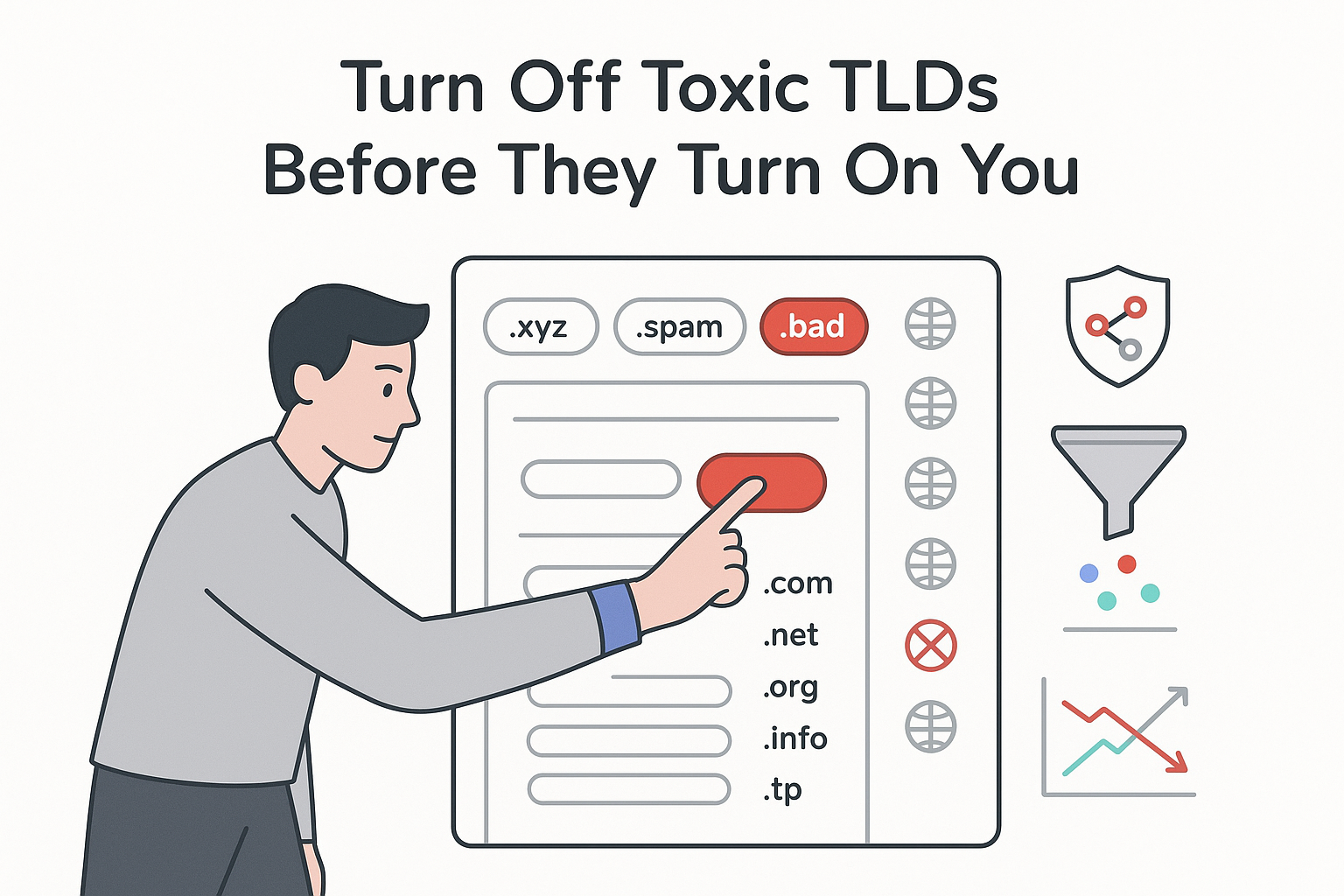
Google Search Advocate John Mueller has confirmed that website owners can disavow entire top level domains (TLDs) using Google's disavow links tool. He described the capability in a Bluesky discussion reported by Search Engine Journal, addressing concerns about links from .xyz domains, and said the functionality has existed since the tool was first introduced.
Key details: Google TLD-level disavow capability
Mueller explained that the existing domain: directive in the disavow file can be applied not only to individual domains but also to full TLDs. For example, adding an entry such as domain:xyz in the disavow text file instructs Google to treat links from all .xyz domains as disavowed for that site.

- A Bluesky user reported a client receiving many "strange" inbound links from sites using the .xyz TLD.
- Mueller said that if those links concern the site owner, they can upload a disavow file listing the problematic sources.
- When most problematic links come from specific TLDs, those entire TLDs can be disavowed using the
domain:directive. - Mueller said this capability has existed "since the start" of the disavow tool but is not clearly described in Google's public documentation.
- He called TLD-level disavows a "big hammer" and advised caution, noting that some sites on every TLD can be good.
- Using a TLD directive means site owners cannot exempt specific domains within that TLD.
- He suggested using the approach only when a TLD is "almost only" associated with spammy links for that particular site.
Mueller repeated that "the disavow file is a tool, not a religion." He said most sites do not need it, while acknowledging there are exceptions where broader actions, including TLD-level disavows, may be warranted.
Background: Google disavow file and domain directive
Google introduced the disavow links tool in 2012 to let site owners ask Google to ignore specific inbound links. Site owners upload a plain text file through Search Console that lists URLs or domains to be disavowed. Google then processes the file and may ignore those links when evaluating rankings.
Google's documentation and spokespeople have consistently said most sites do not need to use the disavow tool, recommending it primarily for sites facing manual actions or clear link scheme issues. This guidance is intended to prevent unnecessary or harmful overuse.
Before Mueller's recent comments, the domain: directive was widely known for disavowing individual domains, not whole TLDs. His remarks clarify that the same syntax also accepts a TLD value, such as domain:xyz, which tells Google to treat all domains with that extension as disavowed sources for the site in question.
SEO reaction and documentation gap
SEO consultant Glenn Gabe noted that he had not seen this TLD-level behavior documented in Google's guidance. Mueller responded in the Bluesky thread, agreeing that the documentation does not promote TLD-wide disavows, partly because of how powerful the directive is. Their exchange highlights that the option exists in the tool but is rarely referenced in official materials.
Source citations
- Google Search Central Help - "Disavow links to your site" describes the disavow file and the
domain:directive. - Statements attributed to John Mueller come from a Bluesky discussion and subsequent coverage by Search Engine Journal.







.svg)

.svg)
.svg)